 Back
Back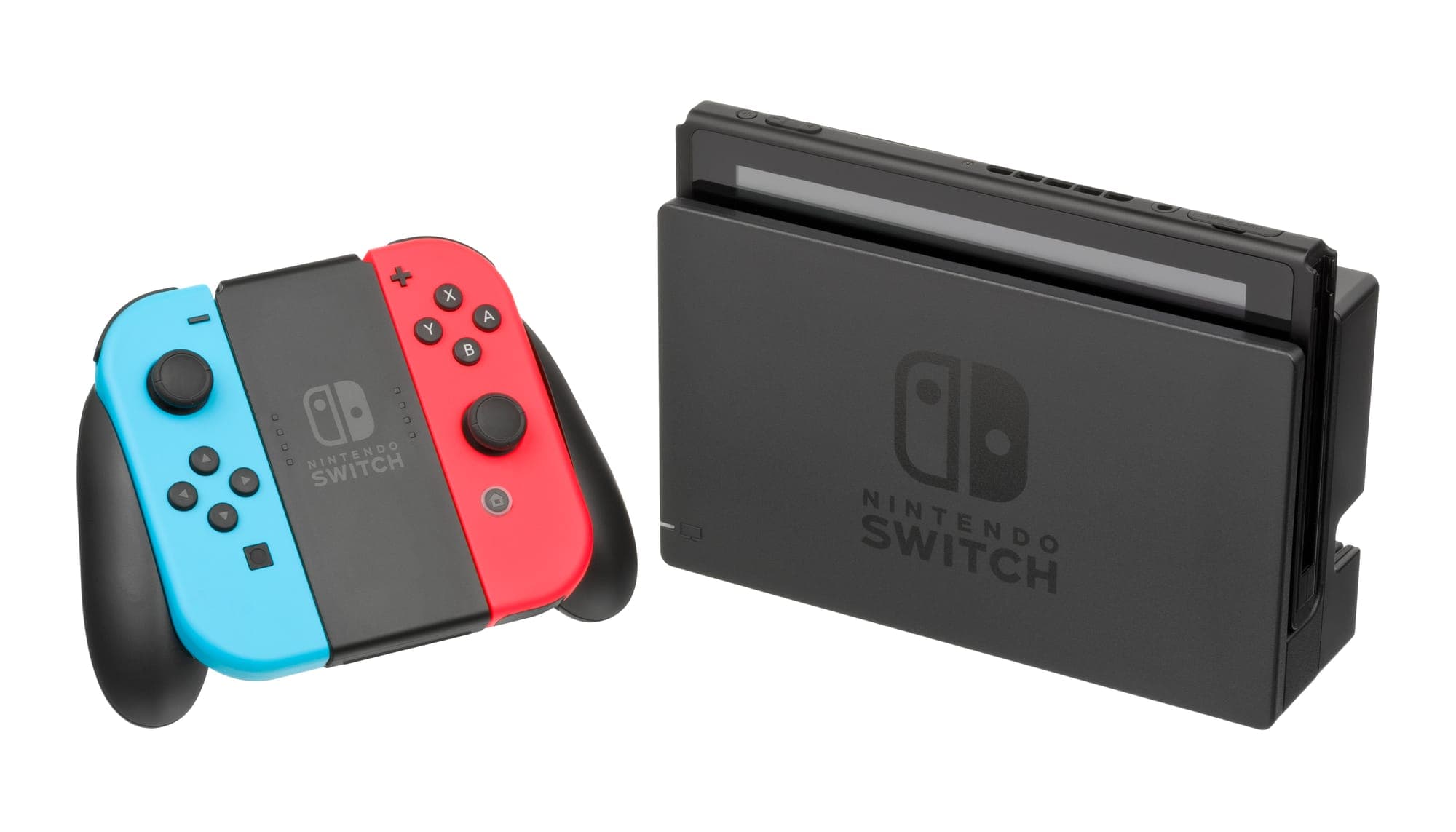
Collecting the Nintendo Switch While It's Still Warm
A sealed copy of Super Mario 3D All-Stars turned into a collectible before the console it runs on ever left store shelves. Nintendo put an expiry date on the physical run – production stopped at the end of March 2021, roughly six months after release – and collectors treated it like a sneaker drop, not a game launch. That's the Switch era in one sentence: the first Nintendo generation where the collecting started while the hardware was still selling.
Which makes it a strange platform to collect. There's no nostalgia-driven scarcity yet, no decades of attic damage – just an enormous install base and a market that already learned the vocabulary of first prints and limited runs. Here's how to navigate it.
Know your HAC from your HEG
The hardware family splits into four main bodies. The launch model (HAC-001, March 2017) is the baseline. In 2019 Nintendo quietly shipped a revision, HAC-001(-01), with a die-shrunk Tegra X1 that roughly doubled battery life – the giveaway is the all-red box, versus the launch model's white one. Then came the handheld-only Switch Lite (HDH-001, late 2019) and the OLED model (HEG-001, late 2021) with its 7-inch panel, 64GB of storage and a dock with a built-in LAN port.
Serial prefixes matter more here than on any previous Nintendo console. Launch units start with XAW; the 2019 revision starts with XKW. Early XAW units are prized by the homebrew crowd because they're vulnerable to an unpatchable boot exploit, and later hardware gets modified with soldered-in modchips instead – listings like this modded Switch OLED are their own corner of the market. Fine if that's what you're after, but a modded console is a tinkerer's machine, not a sealed-shelf piece – and it shouldn't be priced like one.
Why 'limited' stopped meaning 'rare'
Here's the uncomfortable truth about 3D All-Stars: the window was limited, the volume was not. Nintendo pressed a mountain of copies inside those six months, so sealed examples are easy to find – a CIB copy is a lovely thing to own, but it's not a lottery ticket. Genuine scarcity on Switch lives with the boutique publishers: Limited Run Games, Super Rare Games and Strictly Limited Games announce their print sizes up front, and when a run is a few thousand units, it stays a few thousand units.
That transparency cuts both ways, because standard retail games get reprinted constantly, and 'first print' has become a magic phrase sellers sprinkle on listings. If someone claims a first print, ask what makes it one – a specific insert, a cover variant, a detail in the fine print on the back. 'It's old stock' is not an answer.
The dock is half the collectible
Special-edition Switches are where the traps get expensive, because the console itself is often the least distinctive part. The Animal Crossing: New Horizons edition from 2020 is really about the pastel Joy-Con and the patterned white dock – and, infamously, the bundle didn't even include the game. The Zelda: Tears of the Kingdom OLED carries gold Joy-Con and a decorated back panel; the Splatoon 3 OLED has gradient Joy-Con and a graffiti-splattered dock.
All of those parts unclip, and all of them get sold separately. The market is full of Animal Crossing 'editions' that are a standard console wearing orphaned pastel Joy-Con, docked in plain grey. A keeper has the correct console, its own dock and Joy-Con, and ideally the matching outer box. Miss one piece and you're buying a costume, not an edition.
Keeper listing or shelf stock?
Most Switch listings are shelf stock: played, complete-ish, honestly priced. Nothing wrong with that – bulk lots like this hundred-plus game pile are exactly how you build a playing library cheaply. But when a listing claims collector grade, check the things that quietly go missing:
- Inserts and code cards – Switch cases ship near-empty, so any insert matters, and DLC codes in 'complete' boxes are usually long redeemed.
- Boutique extras – Super Rare Games copies come with trading cards; limited editions have certificates, soundtracks, art books. Stripped copies should be priced as stripped.
- The right revision – a special-edition console with a mismatched or missing dock, or a 'launch' unit with an XKW serial, isn't what the title says it is.
- Physical means physical – some boxed Switch releases are just a download code in a case. If the cart isn't pictured, ask.
And a closing heresy: the special editions everyone vaulted on day one will always exist sealed by the thousands. The genuinely hard find in twenty years will be the boring red-box 2019 revision, mint and complete, because nobody thought to save one. What's sitting in your drawer right now that you're not taking seriously?


