 Back
Back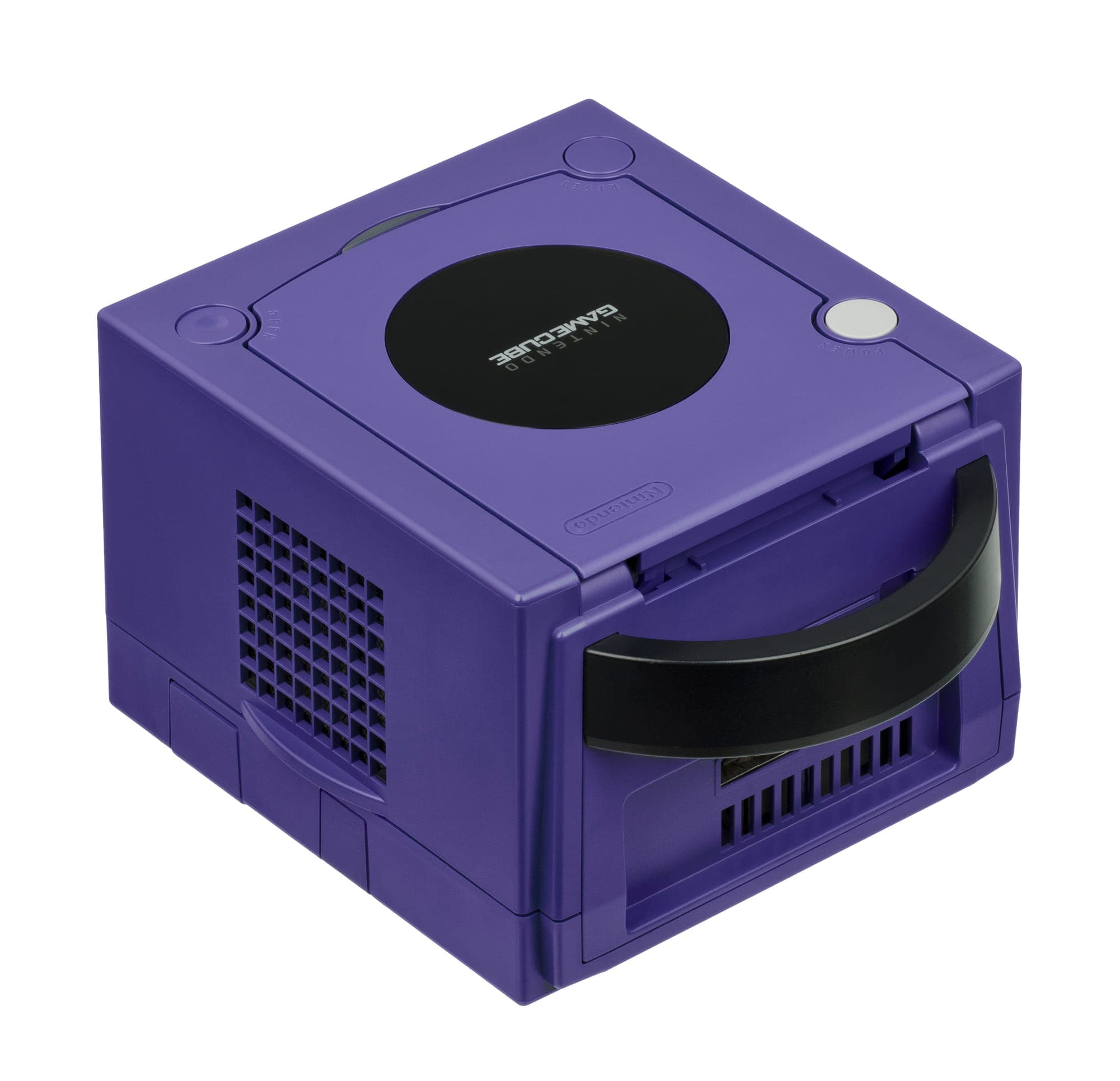
How to Grade GameCube Discs, Cases and Console Bundles
Tilt a GameCube mini-disc under a desk lamp and turn it slowly. Honest wear looks random – a stray arc here, a fingerprint there. But if the whole surface carries one uniform, circular swirl from hub to edge, like it went for a ride on a buffing wheel, you're looking at a resurfaced disc. That's not automatically a dealbreaker. It is something the seller should have mentioned.
Small disc, small margin for error
The GameCube's proprietary 8 cm disc is based on miniDVD technology, and its size changes how you grade it. The data is packed onto a small surface and read from the inner ring outward, so a gouge near the centre hub is far more likely to stop a game booting than the same gouge out at the edge.
Direction matters too. A light scratch running straight from hub to edge crosses each data track once, and error correction usually shrugs it off. A scratch curving along the track – the kind a disc picks up rattling loose inside its case – wipes out long runs of data and causes the stutters and lock-ups sellers describe as "plays fine, mostly".
Resurfacing tells, beyond that uniform swirl:
- A satin, hazy sheen instead of a deep mirror finish, most visible at an angle.
- A playing surface that looks newer than the label side and the case it came in.
- Fine micro-scratches that all run in the same direction, like brushed metal.
Multi-disc games double the homework. A PAL copy of Resident Evil 4 – Capcom's 2005 two-disc masterpiece – needs both discs inspected, and both from the same region and print run.
Cases, covers, and why the manual is half the deal
GameCube clamshells are sturdier than the PS2's flimsy DVD cases, but they still crack at the hinge and around the disc hub, and the artwork fades hard in sunlight. Check the corners for crush marks and look under the plastic sleeve for the tell-tale ripple of water damage on the cover art.
Then count what's inside. A true CIB copy means case, cover art, manual, and the original inserts – NTSC copies typically shipped with registration cards and promotional leaflets, while PAL releases came with thick multilingual manuals. Sellers who know their audience flag it outright: a listing like Luigi's Mansion with the manual included is telling you exactly which tier of complete you're buying. The 2001 launch title without its booklet is a player's copy; with everything present, it starts being a collector's piece.
Player's Choice is a reprint, not a flaw – but know what you're holding
Nintendo reissued its million-sellers under the budget Player's Choice label, and on GameCube the giveaway is printed straight into the cover art: a silver band with the Player's Choice logo across the top of the box. It's not a sticker, so it can't be peeled off – and the disc label and rear artwork can differ from the original run as well.
Heavy hitters like Super Smash Bros. Melee and Mario Kart: Double Dash!! got the treatment, which means both print runs are common in the wild. A Player's Choice copy plays identically, but collectors pay the premium for original first prints, so it sits lower on every want list. The real trap is the frankensteined copy: an original case hiding a Player's Choice disc, or the reverse. Match the disc art to the box before you pay first-print money.
Buying a bundle? Five checks before money changes hands
Console bundles hide their problems in the details. Work through this list against the seller's photos – or in person, with a memory card and a disc you trust.
- Analog sticks: they should centre firmly and snap back. White plastic dust around the stick's base means the bowl underneath is grinding itself away – the classic Melee-veteran controller. And check the C-stick still wears its rubber cap.
- Memory cards: grey is the Memory Card 59, black is the 251, white is the 1019. Test that it formats and holds a save – a corrupt card will happily eat your progress later.
- Disc lid: the hinge tabs crack easily, and the console refuses to spin a disc if the lid switch reads open. It should shut with a clean, confident click.
- Ports: all four controller ports should grip firmly and both memory slots should read. Then flip it over – the original DOL-001 model has a Digital AV Out port for component video, which Nintendo dropped from the later DOL-101.
- Game Boy Player: the bottom-mounted add-on is only half the product, because the boot disc is the half that goes missing. A Game Boy Player without its disc is mostly a very handsome foot for your console.
One closing heresy: a resurfaced disc in a minty case is a player's copy wearing a collector's suit, and there's nothing wrong with that – as long as it's priced like one. The real question to ask before any GameCube purchase isn't "how clean is it?" but "am I shelving this, or playing Melee until 2am?" Those two answers grade very differently.


