 Back
Back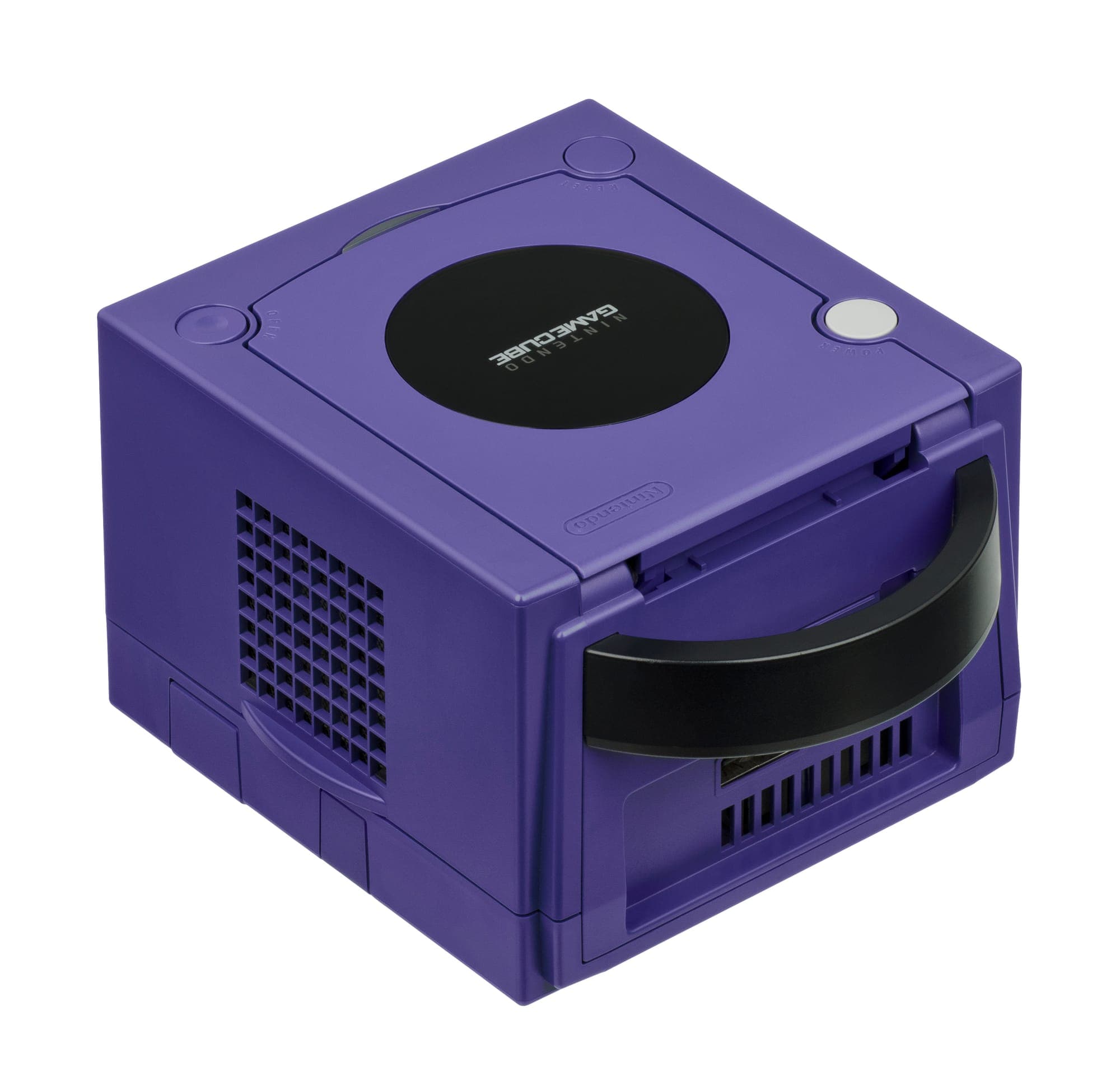
Why GameCube Collectors Check the Back Panel First
The first question a seasoned GameCube buyer asks has nothing to do with the games. It's "does it have the digital port?" Spin the console around: early units carry two video sockets on the back, and the smaller one – labelled Digital AV Out – quietly decides how much that little cube is worth to a picture-quality purist.
Why the back panel matters more than the colour
Nintendo launched the GameCube in 2001 as model DOL-001, digital port included. A later cost-cut revision, DOL-101, deleted it. That port is the only way to pull a clean digital signal out of the machine: Nintendo's official component cable plugged into it, with the digital-to-analogue converter hidden inside the plug itself, and it sold in such small numbers that it now trades for more than most consoles. The whole modern family of plug-and-play HDMI adapters hangs off that same socket too.
So the rule of thumb: a DOL-101 is a perfectly good player's console on a CRT, but the DOL-001 is the one upscaler owners and collectors chase. Colourways matter less than people assume – launch indigo is everywhere, jet black and platinum silver are common, and Japan's spice orange is the one that turns heads in a PAL collection. The true unicorn is the Panasonic Q, the Japan-only GameCube/DVD hybrid with the mirrored front – gorgeous, heavy, and priced accordingly.
The library that never had time to bloat
The GameCube library is small next to the PS2's, and that's precisely why it ages so well. Nintendo published a huge share of it themselves, so the quality density is absurd: Super Smash Bros. Melee from HAL Laboratory in the launch window, Metroid Prime from Retro Studios in 2002, The Wind Waker, Super Mario Sunshine, Pikmin, Luigi's Mansion, and F-Zero GX – that last one built, improbably, by Sega's Amusement Vision.
The third-party exclusives were era-defining too. Resident Evil 4 debuted on GameCube in 2005 and still plays like a masterclass – a clean PAL copy of Resident Evil 4 is one of the sanest first serious purchases on the platform. Star Fox Adventures was Rare's final game published by Nintendo before the Microsoft buyout, and the Pokémon Colosseum and XD: Gale of Darkness pair from Genius Sonority remains a genuinely odd, genuinely loved detour for that series. Very little of this catalogue was licensed shovelware, which is why a fifty-game GameCube shelf feels curated rather than hoarded.
Judging the mini-disc – and the case around it
GameCube games live on 8 cm mini-discs holding roughly 1.5 GB, and they're hardier than they look. Tilt the data side under a strong light: faint circular swirls polish out, deep radial gouges don't, and a crack spreading from the centre hub is a death sentence. Watch for the uniform micro-swirl sheen of a machine resurface – it usually means the disc lived a hard rental life.
The case tells its own story. Most official keepcases include a molded memory-card holder inside, and the manual sits under plastic clips – broken clips and a dog-eared manual are the usual first casualties. One accessory warning while we're here: the Game Boy Player bolts neatly under the console, but it's nearly useless without its Start-Up Disc – the single most commonly missing component in GameCube collecting.
The swapped-case trap hiding inside "complete in box"
Here's the ugly truth about GameCube CIB listings: discs, cases, and inserts spent two decades getting separated and remarried. A "complete" copy is often a genuine disc in a genuine case wearing a printed reproduction cover – and at mini-disc scale, fakes photograph well. Before you pay a CIB premium, check the marriage certificate:
- Hub code vs. region: the fine print around the disc's inner ring ends in a region marking such as USA, EUR, or JPN – it must agree with the case's rating logos (ESRB for NTSC, PEGI or the older ELSPA marks for PAL).
- Insert print quality: genuine covers have razor-sharp legal text and barcodes; repros betray themselves with inkjet banding, oversaturated colour, and fuzzy small type.
- Manual language: PAL games usually shipped with thick multilingual manuals, so a slim English-only booklet in a Nordic-market case is a red flag. A listing that shows the manual openly, like this Luigi's Mansion with its manual, is telling you something good.
- Budget-line honesty: if the spine says Player's Choice, the price should reflect it – reissues routinely get passed off at black-label prices.
Treat every "complete in box" GameCube listing as three separate purchases – disc, insert, manual – that happen to share a case, and grade each one on its own. It's slower, and it will spare you the most common regret in sixth-gen collecting. Hot take to argue with: a legit CIB copy with a tired disc beats a mint loose disc every time, because you can resurface a disc, but you can't un-fake a cover. Which side are you on?


