 Back
Back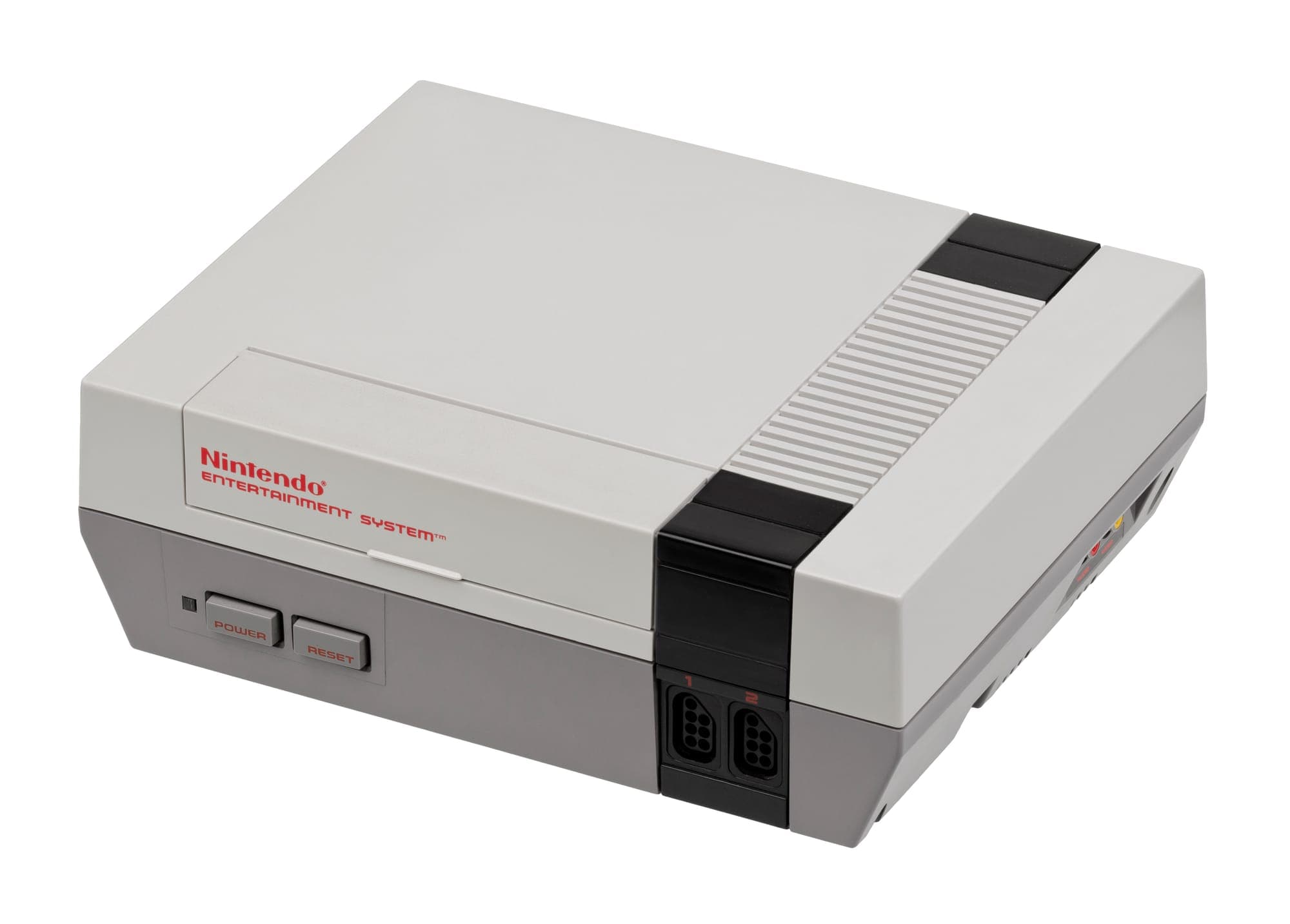
Why NES Collecting Is Still the Hobby's Reference Point
Pick up a grey NES cart and you're holding the founding document of game collecting. Before anyone slabbed a sealed SNES box or argued over PS1 longbox variants, NES owners were already debating five-screw shells, hangtab boxes, and whether that Stadium Events label looked a little too glossy. The Nintendo Entertainment System didn't just rescue the console business after the 1983 crash – it accidentally invented the hobby.
The black boxes that became the hobby's first checklist
When the NES arrived in North America in 1985, Nintendo's first-party launch games shipped in a uniform livery: sprite art floating on a black background. Super Mario Bros., Duck Hunt, Excitebike, Kung Fu, Hogan's Alley, Gyromite – collectors call them the black box series, and they still work as the hobby's original checklist: a finite, visually coherent set where every gap on the shelf is obvious.
The variants are what make it addictive. The earliest boxes carry a die-cut hangtab for store pegs, and the earliest carts close with five slotted screws before Nintendo switched to three security screws and plastic clips. Matching a five-screw cart to a hangtab box is the NES collector's version of matching numbers on a classic car – and it's why two seemingly identical copies of Excitebike can sit at wildly different prices.
Licensed, unlicensed, and the lockout-chip war
Nintendo policed its library with the 10NES lockout chip, a handshake circuit sitting in both the console and every licensed cartridge. No valid handshake, no boot. Publishers who refused Nintendo's licensing terms engineered their way around it – and their workarounds created collecting categories of their own.
- Tengen shipped games in distinctive black shells and fought Nintendo in court over how it defeated the chip – a fight it ultimately lost.
- Color Dreams stunned the lockout chip with voltage tricks and sold titles like Secret Scout in baby-blue cartridges, before reinventing itself as Wisdom Tree, the Bible-games publisher.
- Camerica put Codemasters games in gold-toned shells that look like nothing else on the shelf.
None of them carry the round Official Nintendo Seal, and their shells announce themselves from across the room. A licensed Konami cart like Rollergames and a Color Dreams release live in the same library but tell completely different stories. A serious NES shelf usually wants both.
The 72-pin connector, or why the power light blinks
Every buyer eventually earns their hardware literacy through the front-loading NES-001 and its 72-pin connector. The VCR-style design bends the cartridge down onto the pins, and those pins lose their spring after years of use. When the connection fails, the lockout chip resets the console roughly once a second – that's the famous blinking power light.
Blowing into carts never fixed anything; the moisture likely made corrosion worse. What actually works is cleaning the contacts with isopropyl alcohol, then either re-tensioning the original connector's pins or fitting a replacement. Cheap aftermarket connectors often grip so hard they wear cart edges, which is why purists restore originals. Nintendo conceded the design's flaws in 1993 with the top-loading NES-101, which seats carts directly and drops the lockout chip entirely.
So ask about the connector before buying any front-loader. A seller who knows whether it's original, re-pinned, or replaced has just answered half your questions about how the machine has lived.
Where forgers earn their living – and how to catch them
Now the uncomfortable part: no library rewards fakery like this one. The canonical scam is Stadium Events, the Bandai rarity whose game was re-released as the common World Class Track Meet. Print a convincing label, apply it to the common cart, and the fake even plays correctly. Label swaps like that are exactly why cart checks exist.
- Open it. A 3.8mm security bit costs pocket change. Licensed boards carry Nintendo markings and mask ROM chips; reproductions show EPROMs or modern flash boards.
- Read the label. Repro labels run too glossy and oversaturated, with fuzzy inkjet dithering under a loupe.
- Check internal consistency. A five-screw shell on a late release, or a variant that never shipped in your region, means walk away.
- Judge the whole package. Fake boxes get printed on bright, modern stock. A genuine CIB copy – this boxed Double Dragon II is a good reference – should show consistent aging across box, manual, and cart.
PAL collectors get one extra tool: the region suffixes printed on licensed labels and boxes, SCN for Scandinavia among them. A cart whose code doesn't match its supposed origin is telling on itself.
Every instinct this hobby runs on – counting screws, reading print quality, distrusting the suspiciously clean copy – was learned on the NES first. Master this library and every later console feels like an open-book exam. My take: a front-loader with an honestly re-pinned connector beats a mint top-loader, because NES collecting was never about pristine – it's about provenance. What's the first check you run when a grey cart lands in your hands?


