 Back
Back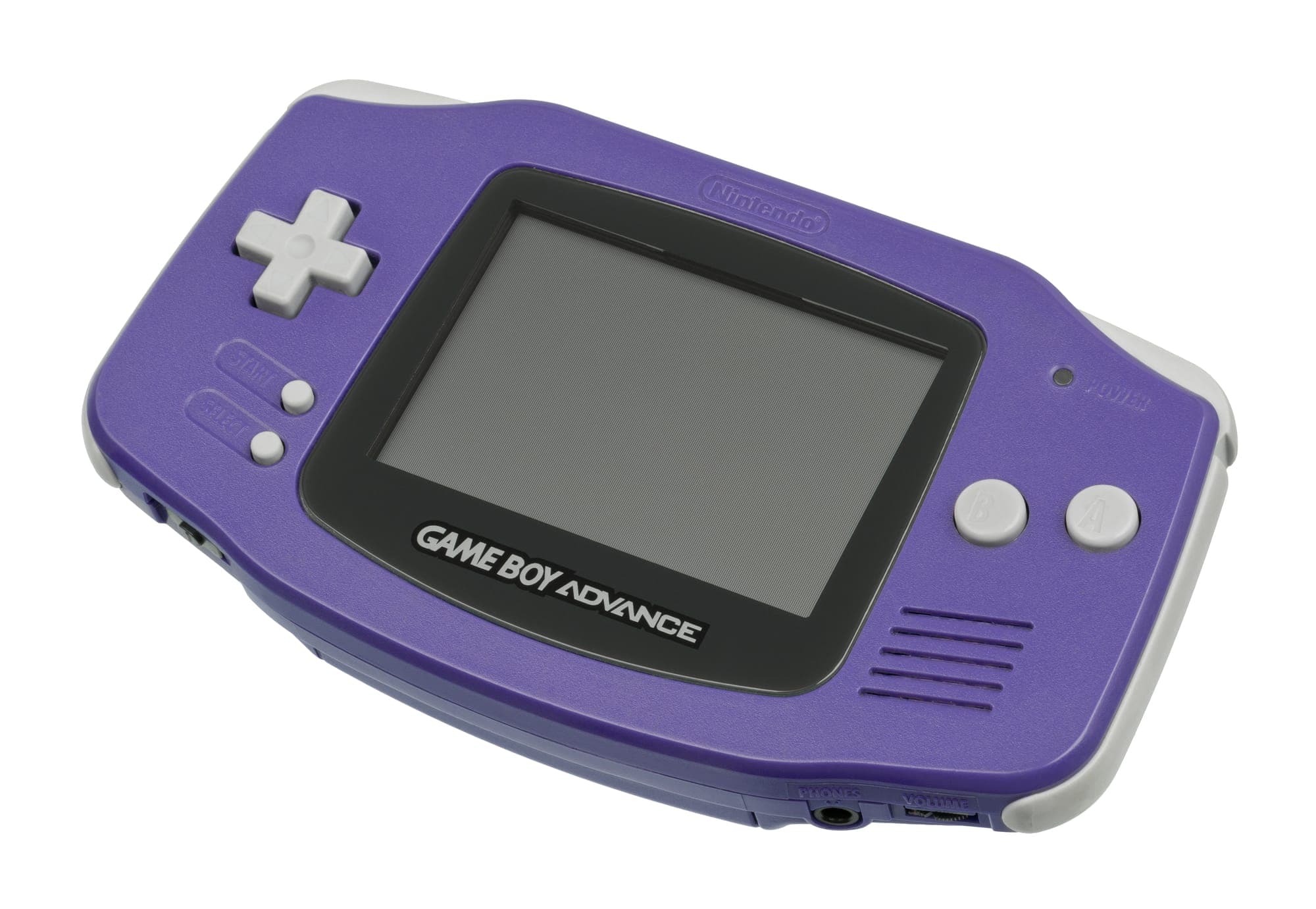
Buying a Game Boy Advance Without Getting a Fake Cart
Two cobalt-blue Game Boy Advance SPs on the same shelf: same clamshell, same honest scuffs, same price. Flip them over and read the sticker on the bottom – one says AGS-001, the other AGS-101. That middle digit is the whole ballgame, and if the seller hasn't mentioned it, you should be the one who checks.
The GBA is the rare platform where the hardware revision routinely matters more than the game in the box. It's also – less charmingly – home to some of the most counterfeited cartridges in all of retro collecting. Buying well means knowing both stories.
The hardware ladder, from squint-to-play to genuinely gorgeous
The original 2001 wide-body (AGB-001) runs a 32-bit ARM7TDMI processor and plays every Game Boy and Game Boy Color cartridge going back to 1989. Its fatal flaw: a reflective screen with no light whatsoever. Entire childhoods were spent tilting it toward a lamp, and that's exactly how you should test one – it's a lovely shelf piece and a compromised daily player.
The 2003 SP (AGS-001) fixed the light with a frontlit clamshell and a rechargeable battery, while famously deleting the headphone jack – wired audio needs Nintendo's adapter. The revision collectors actually hunt is the AGS-101, whose true backlit panel remains one of the nicest screens Nintendo ever put in a handheld. It arrived late in the platform's life and mostly in North America, which is why stock PAL units are genuinely scarce.
Then there's the Game Boy Micro (OXY-001, 2005): a jewel-like backlit screen, swappable faceplates, and a chassis that disappears into a coat pocket. The catch is that it drops Game Boy and Game Boy Color compatibility entirely. GBA-only, by design.
Why the bottom sticker beats the bundled game
When two listings look identical, the model number is what actually moves the value – a common pack-in game does far less for a bundle than those three characters on the underside. Browsing something like this Game Boy Advance SP listing, ask for a clear photo of the bottom label plus one of the screen running in a dim room. Frontlight and backlight look unmistakably different side by side.
One honest wrinkle: IPS screen mods are everywhere now. They make an AGS-001 – or an original wide-body console – play beautifully, but a modded unit isn't a stock AGS-101 and should be described as modded. Great to own; a different thing to collect.
Spotting a fake cart before you pay
GBA games – Pokémon above all – have been bootlegged at industrial scale, and the console happily boots most fakes, so "it works" proves nothing. Check the physical tells instead:
- Label: genuine labels are crisply printed with the game's product code (US Pokémon Emerald reads AGB-BPEE-USA) and a region-correct ESRB or PEGI mark. Pixelated artwork, glossy paper, or off-model fonts are instant red flags.
- Shell: Nintendo used tri-wing screws, and details like Emerald's glittery translucent green shell are hard to fake convincingly. Compare against a cart you know is real whenever you can.
- Board: pop the shell and a genuine board shows a Nintendo silkscreen and tidy, fully marked chips. Epoxy blobs, blank chips, or a battery where none belongs are bootleg signatures.
That last one matters more than people think. Pokémon FireRed and LeafGreen shipped with no battery at all, so a battery on one of those boards means someone is selling you a fake – or at best a franken-cart. Loose common carts like Donkey Kong Country on GBA get faked less often than Pokémon, but the same checks take thirty seconds either way.
What a dead battery does – and doesn't – mean
Here's the nuance that trips up buyers. Pokémon Ruby, Sapphire, and Emerald carry a CR1616 battery, but it only powers the real-time clock behind berry growth and other timed events. Your save lives in flash memory. A cart showing the famous "internal battery has run dry" message still saves perfectly, and the battery swap is a cheap, well-documented repair.
So a dead battery is not evidence of a counterfeit, and it's not a lost save. The inverse is the real tell: plenty of bootlegs fake flash saves with battery-backed SRAM, so a "Pokémon" cart that forgets your progress is quietly telling you exactly what it is.
The takeaway for this platform: buy the revision first and the game second, and never pay Pokémon money without seeing the board. And here's the hot take – a scuffed AGS-101 beats a minty AGS-001 every single time, because you look at the screen, not the shell. Disagree? There's a comment box below.


