 Back
Back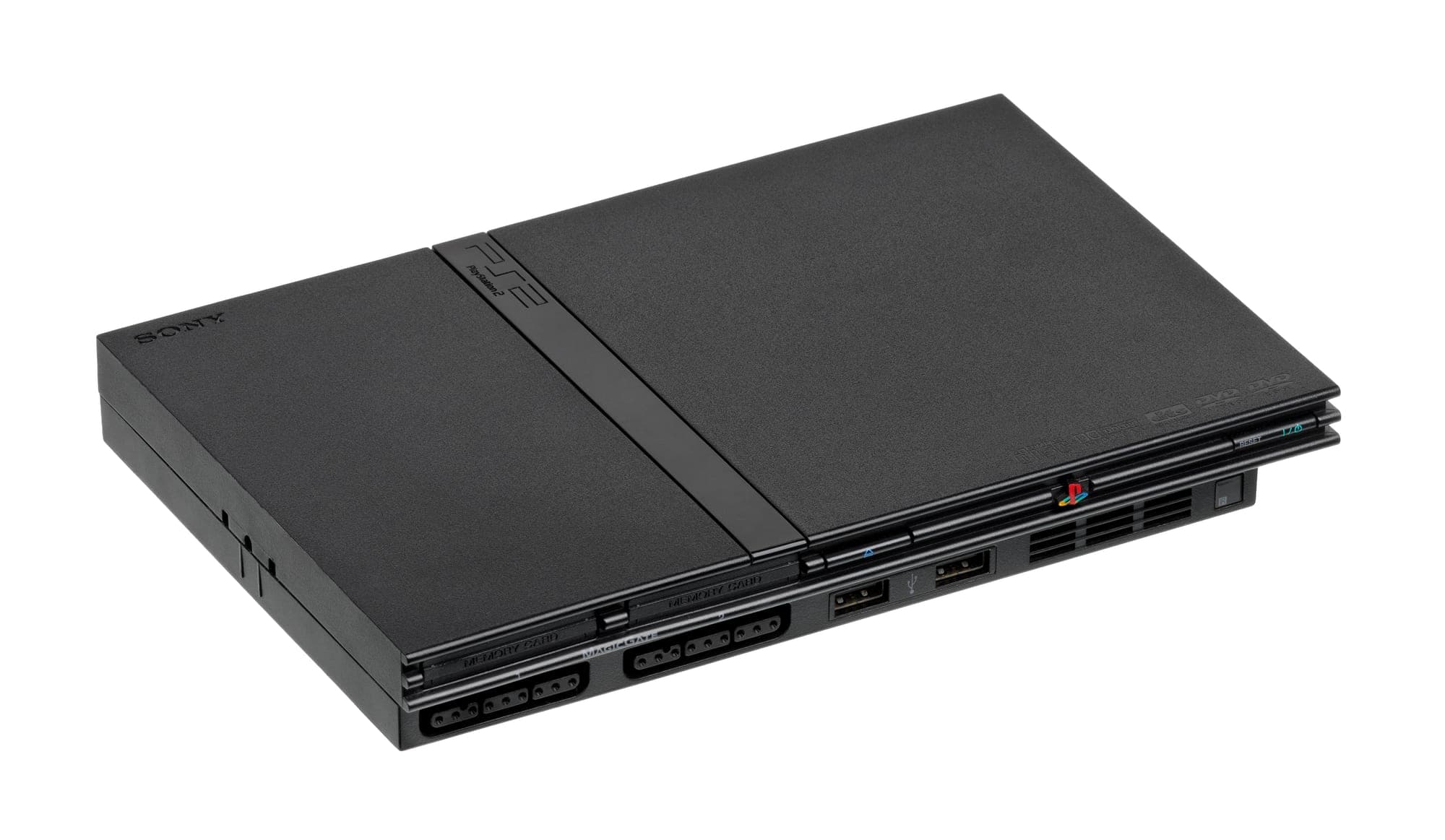
PS2 Fat vs Slim and the SCPH Numbers Collectors Check First
Flip the console over before you hand over any money. The sticker on the underside of every PlayStation 2 carries an SCPH model number, and those few characters tell you more than the seller ever will: which disc drive is inside, whether it can take a hard drive, how it behaves with PS1 discs, and how easily it can be softmodded. Sony built PS2s for over a decade, and they are emphatically not all the same machine.
How to read an SCPH number in ten seconds
Every PS2 wears the same badge: SCPH followed by five digits, occasionally with a letter suffix for special colours. The leading digits are the generation. SCPH-10000, 15000 and 18000 are the Japanese launch-era fats – the 10000 famously needed a DVD driver utility loaded from the memory card just to play films. The 30000 and 39000 series are the worldwide workhorses, the 50000 is the final and best fat, and anything from 70000 upward is a slim.
The final digit is the region code, and it's the difference between a machine for your PAL library and an expensive paperweight:
- 0 – Japan (NTSC-J)
- 1 – North America (NTSC-U/C)
- 2 – Australia and New Zealand (PAL)
- 3 – United Kingdom (PAL)
- 4 – continental Europe (PAL)
So an SCPH-50004 is a European late-model fat, and an SCPH-70001 is a first-run North American slim. Ten seconds, no guesswork, no relying on a listing photo taken from across the room.
Where the fat earns its weight
The fat's party trick is the expansion bay. Slot in Sony's network adapter and a hard drive and you have the setup Final Fantasy XI actually shipped expecting – and the rig that online-era oddities like Resident Evil Outbreak File #2 were designed around. No slim ever had it.
Early fats also carry an i.Link (FireWire) port for system-link play, quietly deleted from the 50000 series onward. What the early fats are less loved for is the drive itself: the 30000 generation's Disc Read Error reputation was bad enough that it eventually produced a class-action settlement in the United States. Lasers can be realigned, but a console that's been skipping cutscenes for years has usually already met someone's screwdriver.
That's why the SCPH-50000 series is the quiet favourite. It keeps the expansion bay, adds a built-in infrared receiver for the DVD remote, supports progressive-scan DVD playback, runs quieter, and its drive has a far better survival record. If you want one PS2 that does everything the platform ever promised, this is the one.
The slim collectors actually hunt is the first one
The 2004 redesign, SCPH-70000, is a genuinely different computer wearing the same logo. Ethernet moved onboard, the power supply moved into an external brick, and the expansion bay vanished – which is why the hard-drive era ended the day the slim arrived.
From the SCPH-75000 onward, Sony merged the Emotion Engine and Graphics Synthesizer onto a single chip and swapped the original MIPS I/O processor for a PowerPC-based part nicknamed Deckard, which emulates the old chip in software. It works remarkably well – and still trips over a short list of PS2 and PS1 titles with glitches the earlier hardware never shows.
The final SCPH-90000 brings the power supply back inside the case and is the tidiest PS2 ever made, but its last BIOS revisions closed the door on the classic memory-card softmod. Which is why the humble 70000 is the connoisseur's slim: original chipset behaviour, network port included, none of the late-model asterisks.
Shells and colours change the shelf, not the machine
Japan got the fun ones – the SCPH-37000 line alone came in Ocean Blue and the "European Automobile Color Collection" shades like Light Yellow and Astral Blue. PAL territories mostly saw Satin Silver fats, then pink and white slims. A rare shell is genuinely scarce, and boxed examples with matching inserts are the ones that make collectors go quiet. But underneath, it's whatever revision the number says it is: a gorgeous shell on a Deckard-era slim still has Deckard-era quirks.
And no revision changes the library. The Simpsons: Hit & Run plays identically on a launch fat and a final slim. Where hardware does matter is at the edges: lightgun games like Time Crisis 2 need a GunCon 2, and the GunCon needs a CRT – no PS2 revision fixes that, only your telly does.
So here's the honest hierarchy: buy an SCPH-50000 fat if you want the whole platform, a 70000 slim if you want it small, and treat everything else as a curio or a donor. Or ignore all of it, because the best PS2 is still the one whose laser reads a disc on the first try. Which camp are you in – bay loyalist, or brick-and-slim?


