 Back
Back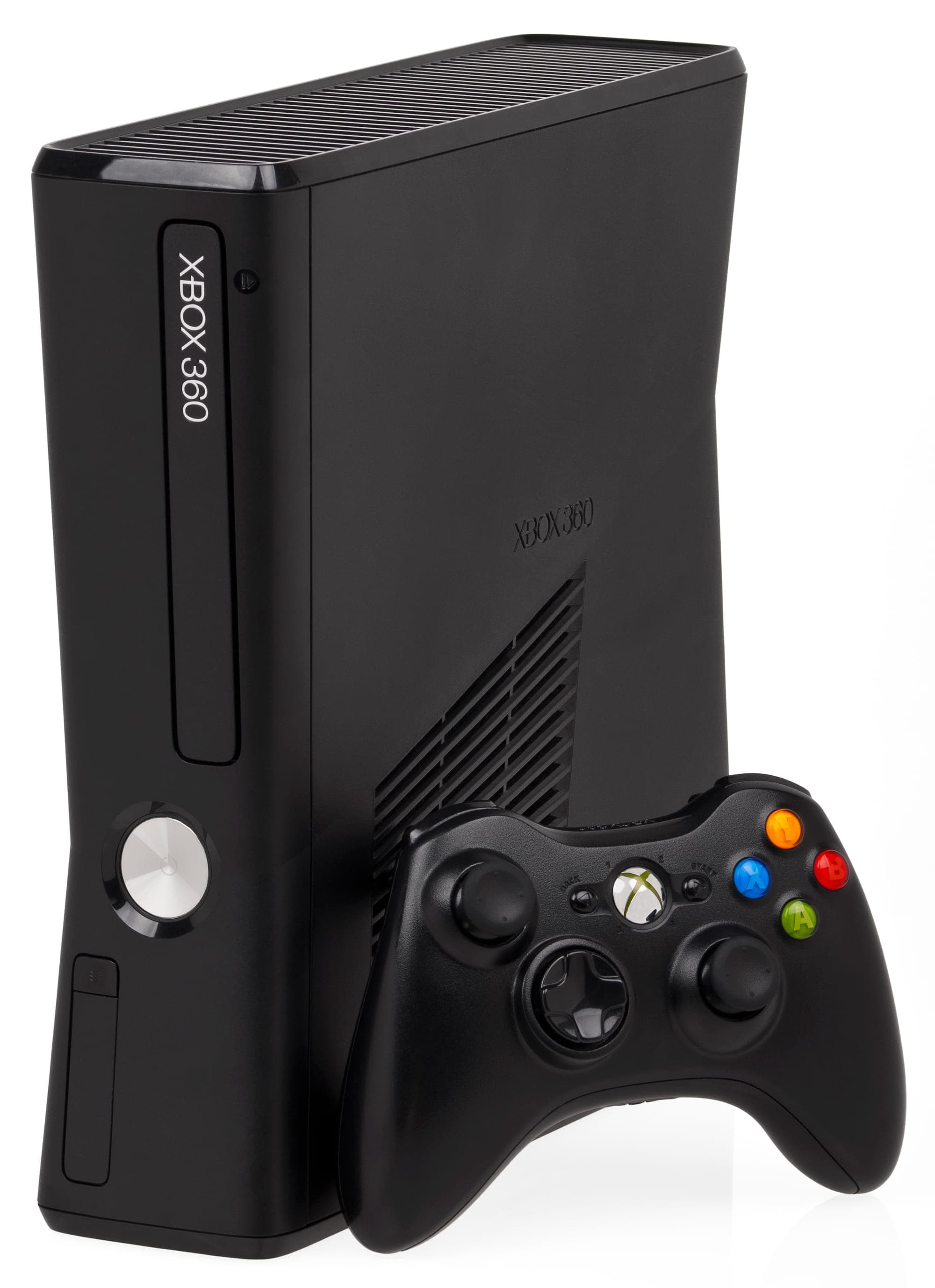
Buying an Xbox 360 Without Inheriting the Red Ring of Death
The most honest number on a used Xbox 360 isn't the asking price – it's the amp rating printed beside the power socket. Flip the console over. 16.5A means a launch-era Xenon, 14.2A means a Falcon, and 12.1A means a Jasper – the one revision of the original "fat" 360 that runs cool enough to trust. Microsoft built these machines by the tens of millions across half a dozen motherboard revisions, and from the outside they're all the same white or black wedge. The label is where the truth lives.
Every fat 360 is guilty until proven Jasper
The family tree matters because it maps straight onto failure rates. Xenon launched in November 2005 with hot 90nm chips and no HDMI port. Zephyr arrived in 2007 inside the Elite, adding HDMI but keeping the heat. Falcon (late 2007) shrank the CPU to 65nm, and Jasper (late 2008) finally shrank the GPU too – at which point reliability transformed overnight. There's also Opus, an oddball refurbishment board living in Xenon-style shells with no HDMI, mostly seen in warranty replacements.
Your identification tells, in order of trustworthiness:
- The console's own power label: 16.5A is Xenon or Zephyr, 14.2A is Falcon, 12.1A is Jasper.
- The power brick: 203W, 175W and 150W respectively – but bricks get swapped between consoles, so treat this as supporting evidence only.
- HDMI: no port at all means Xenon or Opus.
- The manufacture date on the serial sticker: genuine Jaspers show up from late 2008 onward.
Bonus points if you find a Jasper-era Arcade unit with onboard flash memory – a detail sellers almost never mention and collectors almost always check.
The red ring is a when, not an if
Three flashing red lights around the power button meant general hardware failure, and it happened at a scale no console maker has matched since. The accepted culprit: GPU solder joints cracking under repeated heat cycles. Microsoft extended the warranty to three years specifically for the red ring of death and absorbed a charge of well over a billion dollars doing it. That's not collector folklore – that's an earnings report.
For buyers, the trap isn't the dead console. It's the temporarily revived one. Reflowed boards and "towel trick" resurrections hold together just long enough to survive a seller's test video, so inspect the machine rather than the claim: a broken warranty seal, chewed-up screws, or an X-clamp mod all tell you someone has been inside. The single red light of an E74 error – usually the video scaler chip – belongs to the same family of heat failures.
The 2010 Slim, with its Valhalla board combining CPU and GPU on one 45nm chip, effectively ended the saga. Microsoft even deleted the red LEDs from the design, so a Slim physically cannot show you a red ring. The 2013 Xbox 360 E stripped things back further and remains the least loved, and least collected, of the family.
The special editions actually worth hunting
Console bundles are where 360 collecting gets properly fun, because Microsoft went weird with them:
- The Halo 3 Special Edition console in Spartan green and gold (2007) – the definitive fat-360 variant.
- The silver Halo: Reach Slim bundle, with custom startup and disc-eject sounds.
- The Star Wars Kinect bundle: an R2-D2-styled console that beeps like the droid, paired with a gold C-3PO controller. Ridiculous. Wonderful.
- The crimson Gears of War 3 Slim, for people who like their hardware angry.
On the software side, steelbook-era releases like Gears of War 2 Limited Edition – the one with the golden Lancer code – are still an affordable way in. And don't sleep on faceplates: the fat 360's swappable fronts were a whole accessory economy that died with the Slim, which makes the licensed ones a cheap and genuinely finite niche.
The library nobody else got
The 360 stays relevant because big chunks of its catalogue never went anywhere else. Epic's Gears trilogy and Turn 10's Forza games defined the machine, but the collector bait is the JRPG push: Mistwalker's four-disc Lost Odyssey, Blue Dragon, tri-Ace's Infinite Undiscovery, and PAL-market curios like Magna Carta 2. Tales of Vesperia spent a decade as a Western 360 exclusive before its re-release. That's a shelf you simply cannot build on rival hardware.
With the 360's digital storefront now closed, the Xbox Live Arcade era survives mostly on disc – physical compilations like the triple pack carrying Playdead's Limbo quietly became the only way to put those games on a shelf. One last habit worth forming: the 360's drive was infamous for carving a perfect circular scratch into any disc spinning while the console moved. Tilt every disc under a light before you pay.
So here's the take that annoys purists: a 12.1A Jasper Arcade with a stack of PAL JRPGs is a smarter buy than any mint Xenon launch unit, provenance be damned. The 360 is that rare machine where the boring, late, cost-reduced revision is the collectible one – because it's the one that will still boot in ten years. Buy the label, not the listing photo. And when a seller swears their Xenon has "never red ringed", remember the correct translation: it hasn't red ringed yet.


