 Back
Back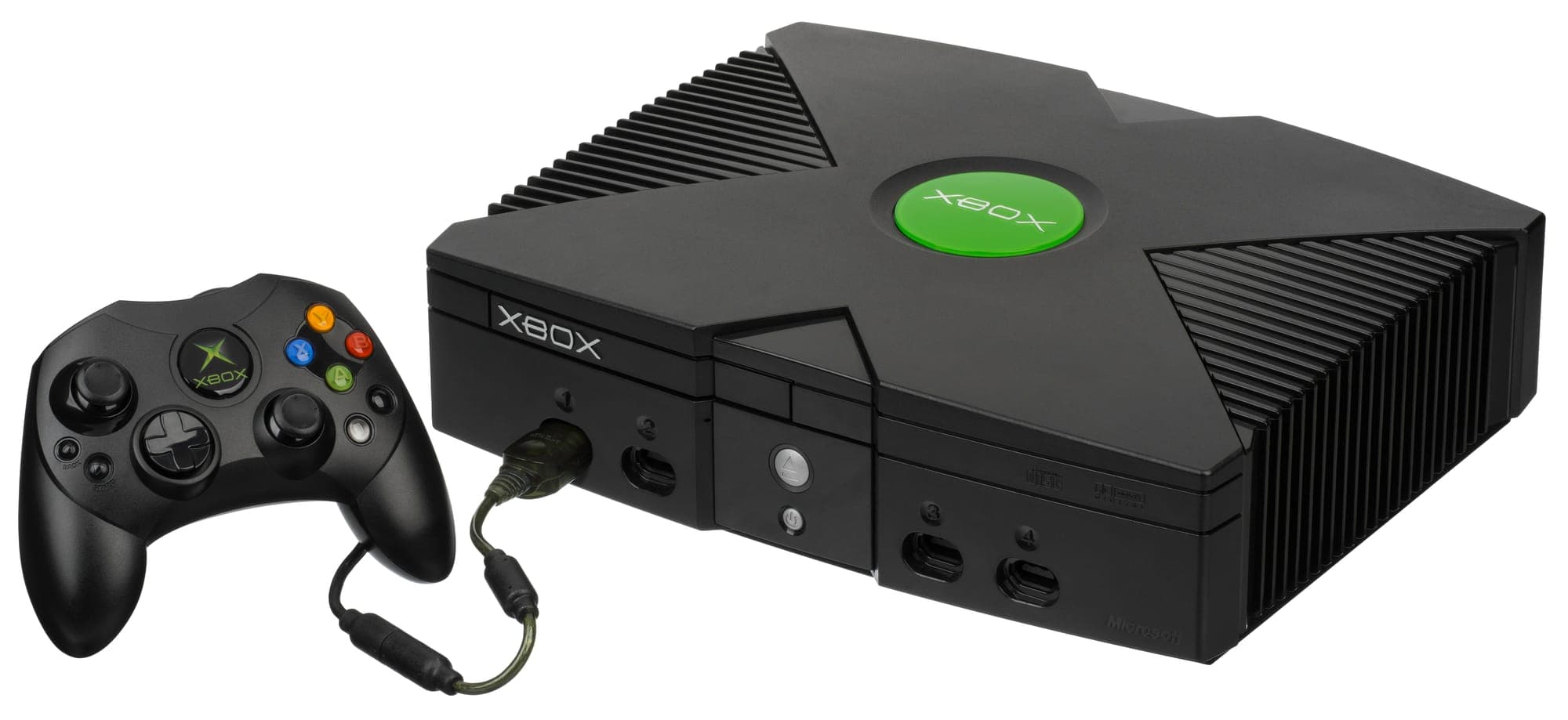
The Original Xbox, the Duke, and the Capacitor Time Bomb
Somewhere inside almost every early original Xbox, a capacitor the size of a fingernail is quietly deciding whether that console lives or dies. If yours has been sitting in a loft since the Halo 2 days, the decision may already have been made – and you won't know until you crack the case open. We'll get to that. First, some respect for the most gloriously excessive console of its generation.
Microsoft crashed the console war with a PC in a trench coat
When the Xbox landed in November 2001, Sony's PlayStation 2 was already a phenomenon and Nintendo's GameCube arrived in North America the very same week. Microsoft's answer was brute force: a 733 MHz Intel CPU, an Nvidia GPU, 64 MB of unified RAM, and – the genuinely radical part – a built-in hard drive and an Ethernet port as standard.
That meant no memory cards to buy, custom soundtracks ripped straight to the drive, and a machine quietly built for online play a full year before Xbox Live launched in 2002. It looked like a PC in a trench coat because it basically was one, which is exactly why the homebrew and modding scene never let it go.
The Duke was too big for Japan – and Japan fixed it for everyone
The original controller – officially just "Xbox Controller", universally known as the Duke – was enormous. Memory card slots on top, black and white buttons crammed around the face, and a footprint that made Sony's DualShock 2 look like a travel accessory.
Japan wasn't having it. For the Japanese launch in 2002, Microsoft shipped a smaller, tighter pad, and it was so obviously better that it went worldwide as the Controller S and eventually replaced the Duke in the box entirely. The punchline: the Duke has since become the cult favourite, loved for exactly the excess that got it retired.
Halo carried the box, but the cult classics built the shrine
Bungie's Halo: Combat Evolved was the launch title that justified the whole gamble, and Halo 2 turned Xbox Live into a way of life in 2004. But collector affection for this library runs deeper than Master Chief:
- Panzer Dragoon Orta – Sega's Smilebit studio delivering a rail-shooter swan song exclusively on Microsoft's hardware, which still feels faintly surreal.
- Jet Set Radio Future – same studio, same year-one Sega-on-Xbox energy, and still trapped on the platform to this day.
- Steel Battalion – Capcom's mech sim with a controller the size of a coffee table, complete with a working eject button.
- Ninja Gaiden, Otogi, and Star Wars: Knights of the Old Republic – Team Ninja, FromSoftware, and BioWare all doing some of their best work on the big black box.
And because the Xbox was a PAL workhorse too, digging through European collections is half the fun – everything from Leisure Suit Larry: Magna Cum Laude to Need for Speed: Most Wanted turned up on the platform, and PAL shelves are where a lot of clean copies still hide.
The capacitor problem, the drive lottery, and the editions worth hunting
Now the bad news. Board revisions 1.0 through 1.5 use a clock capacitor to keep the internal clock alive while the console is unplugged – and these capacitors leak. The electrolyte creeps across the motherboard and eats traces, and it does this silently, in storage, while the console still appears to work fine.
The fix is beautifully simple: open the console and remove the capacitor entirely. The Xbox runs perfectly without it – you'll just be asked to reset the clock after it's been unplugged for a while. Revision 1.6 boards use a different part that doesn't share the leak problem, so those can be left alone. If a seller can't tell you whether the cap has been pulled on an early unit, assume it hasn't.
The disc drive is the other lottery. Xboxes shipped with drives from Thomson, Philips, Samsung, and Hitachi, and they did not age equally. Samsung drives are the readers collectors hope to find inside; Thomsons are the ones that famously grow picky with age. Two identical-looking consoles on a shelf can be very different machines a couple of decades on.
As for the hardware people actually hunt: the translucent Crystal Xbox, a PAL-market release, and the translucent green Halo Special Edition are the two every collector should recognise on sight. Japan got its own translucent variants too – including the blue Kasumi-chan console – and those rarely leave the country. Standard black units are still plentiful, so condition and completeness do the heavy lifting: a boxed, cap-pulled, Samsung-drive console sits in a different tier from a loft-fresh gamble.
The big black box spent years as the unloved giant of the sixth generation, and that neglect is exactly what makes it interesting now: the library is superb, the hardware is honestly repairable, and half the surviving consoles are quietly corroding while nobody looks. Pull the cap, check the drive, and you've saved one. So, the only question that matters – Duke or Controller S? Answer carefully; it says more about you than you think.


