 Back
Back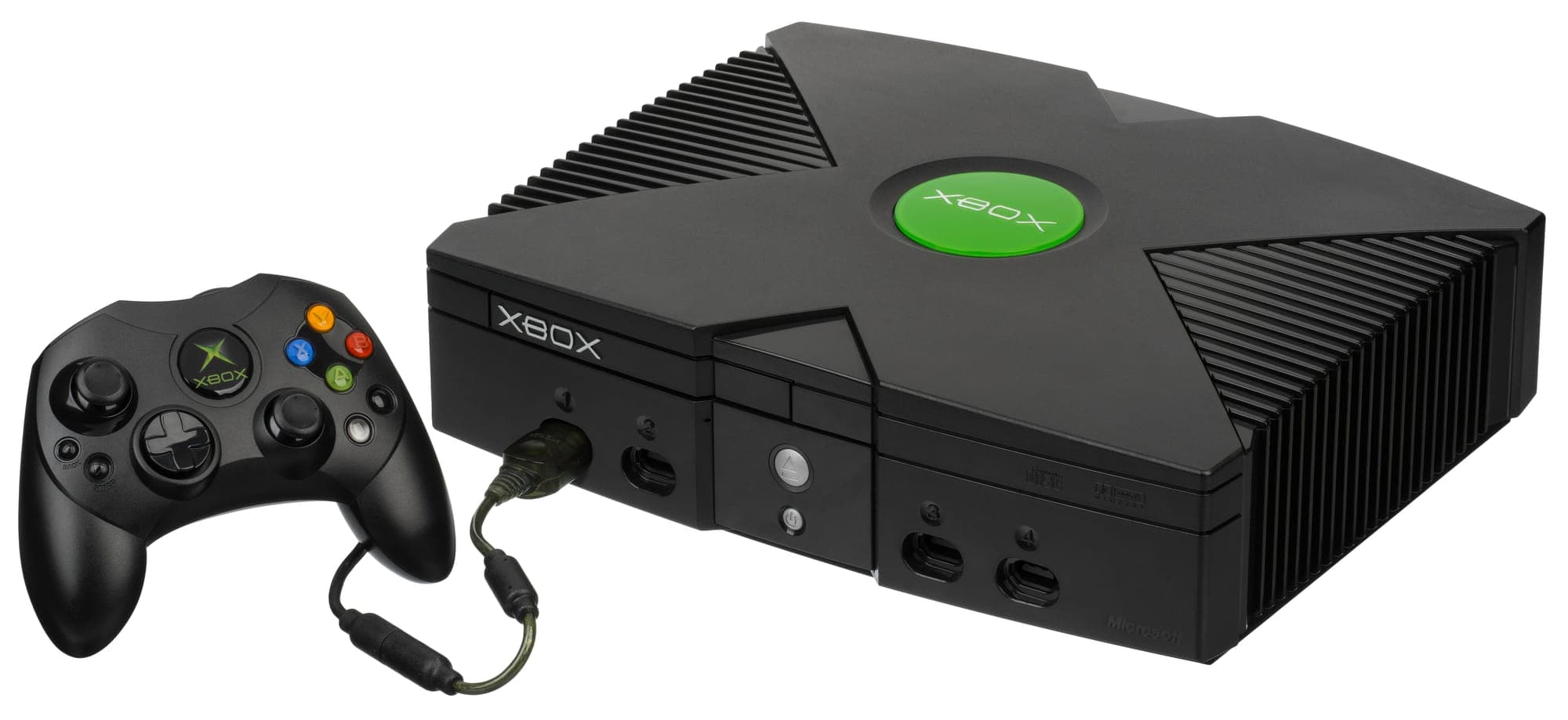
The Original Xbox Is Finally Getting Collector Respect
Pop the hood on an original Xbox that's been sitting in a loft since 2004 and look for the small barrel-shaped capacitor near the middle of the board. If it's wearing a fuzzy brown crust, that motherboard is quietly dissolving itself. That one component – the infamous clock capacitor – is doing more to reshape original Xbox collecting than any YouTube retrospective ever could.
For two decades the big black box was the console nobody argued about. The PS2 had the deepest library in history, the GameCube had Nintendo's nostalgia machine behind it, and the Dreamcast had martyrdom. The Xbox had Halo, apparently, and that's where most conversations ended. That's finally changing, and the reasons matter whether you're buying or selling.
Why the Xbox spent twenty years as the wallflower
Some of it was context. It launched in 2001 straight into the teeth of the PlayStation 2 – still the best-selling console ever made – and most of the era's third-party heavyweights turned up on Sony's machine anyway. The Xbox read as optional: the box you bought for Halo and the built-in Ethernet port.
Some of it was the machine itself. It was essentially a compact PC – Intel CPU, NVIDIA graphics, a hard drive as standard – and PC-like things rarely trigger nostalgia the way bespoke weirdness does. The Duke controller became a punchline long before it became a beloved artifact. Retro culture spent its energy on SNES carts and PS1 jewel cases while the black monolith sat under CRTs, unloved and, crucially, unpreserved.
The cult library everyone skipped is doing the heavy lifting
The shift started with games that never escaped the hardware. Jet Set Radio Future (Smilebit, 2002) has never been re-released on anything – no port, no remaster, no backward compatibility. If you want to play it, you need an Xbox. The same gravity surrounds Steel Battalion, Capcom's mech sim with its forty-odd-button controller and foot pedals, and Otogi: Myth of Demons, FromSoftware's gorgeous demon-slasher from years before anyone said "Soulslike".
Then there's the horror crowd chasing Call of Cthulhu: Dark Corners of the Earth, Headfirst Productions' Lovecraft sim from a studio that went under not long after shipping it. Complete copies – like this CIB example – are precisely the sort of thing getting hunted now, because the game never stopped being talked about and never got easier to find.
The community also gave the console a pulse again. Insignia, the fan-run replacement for the original Xbox Live service Microsoft switched off in 2010, put Halo 2 and its peers back online. A console you can actually do things with attracts players – and collecting follows playing, every single time.
A leaky capacitor is quietly thinning the herd
Now the hardware reality. Motherboard revisions 1.0 through 1.5 carry a clock capacitor that keeps the internal clock ticking through power cuts. After twenty-plus years, these leak electrolyte onto the board and eat the traces around them. The 1.6 revision used a different part and is broadly exempt, but everything earlier is on a countdown unless someone has snipped the capacitor out. The console runs fine without it – it just forgets the time when unplugged.
It's not the only failure mode, either. The Thomson DVD drives fitted to many units are notorious for weak lasers, and every stock hard drive is locked to its console with a unique key – lose the drive without an EEPROM backup and a simple swap becomes a project.
So "it works" isn't the whole story. Before you buy, ask:
- Has the clock capacitor been removed on a 1.0–1.5 board, and are there photos of the surrounding traces?
- Which DVD drive is inside – a Thomson, or one of the sturdier Philips, Samsung or Hitachi units?
- Is the original hard drive healthy, and has the EEPROM been backed up?
Loose Halo 2 discs are everywhere – clean CIB isn't
Here's the paradox sellers should understand. The Xbox's biggest games shipped in enormous quantities, so loose copies of Halo 2 and the annual sports entries are functionally infinite. What's evaporating is completeness: the green DVD-style cases survive, but manuals and inserts walked off decades ago, and first-print black-label copies sit alongside Platinum Hits reprints in NTSC regions and the Xbox Classics budget line in PAL territories – a distinction more buyers now check.
Consoles follow the same curve. Loose units are car-boot-common; a clean example with a matching controller, original cabling, a healthy board and the retail packaging is a different species entirely. Variant hunters have it harder still – try finding the translucent-green Crystal edition that PAL regions got, complete.
The original Xbox was never rare, and it still isn't. But healthy, complete, unbutchered examples get scarcer every year a capacitor sits unsnipped in someone's attic – and the demand side has finally shown up. If your instinct says the generation's most-ignored console can't be worth your shelf space, remember people said exactly that about the Dreamcast. So: cut the cap, keep the box – and tell us which Xbox cult title you'd defend to the death.


