 Back
Back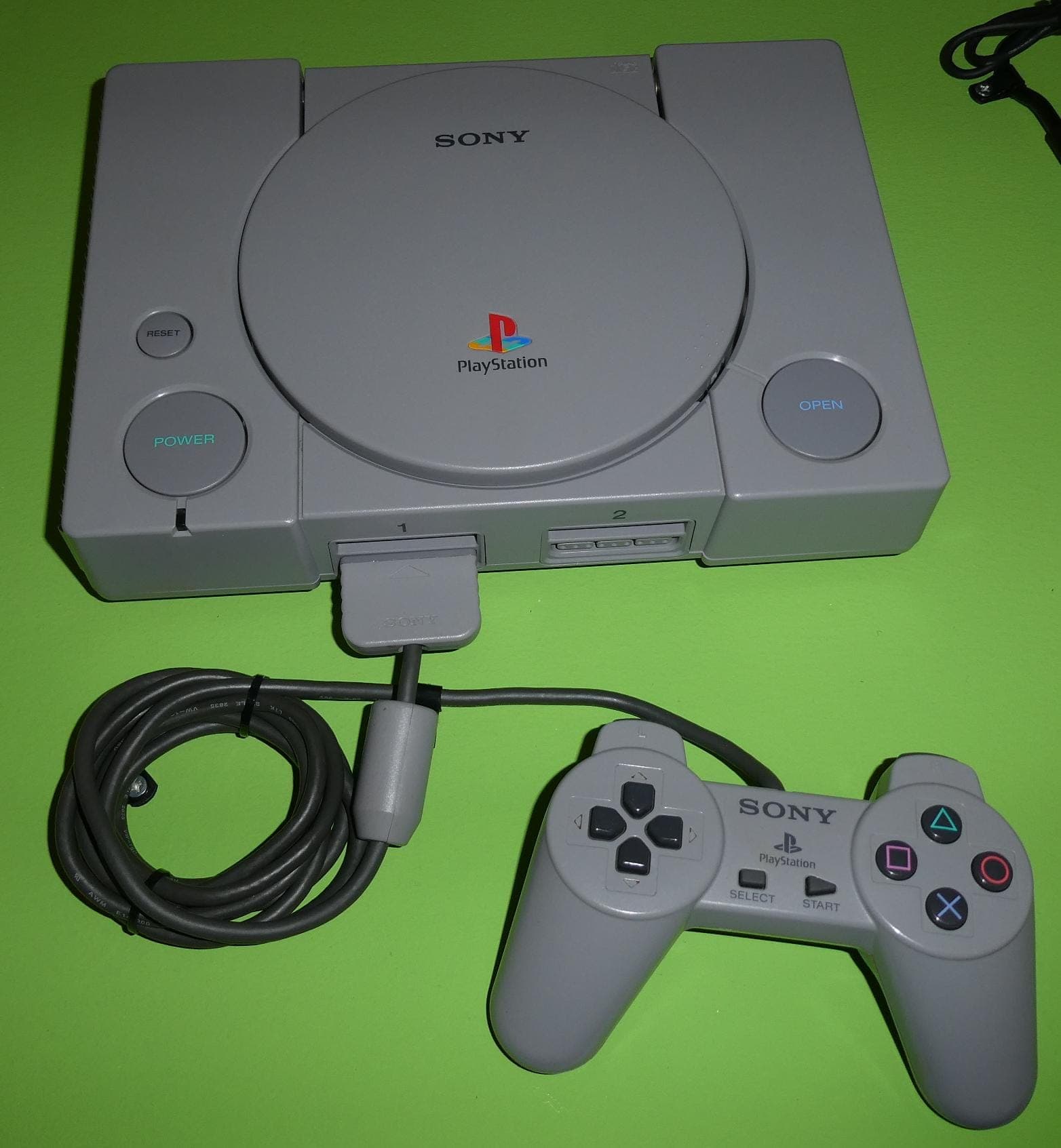
How Sony's CD Gamble Made the PS1 a Collector's Console
Ask anyone who owned a launch-era PlayStation why it ended up sitting upside down on the carpet, and you'll get the same sheepish grin. The optical drive in early units wore with age, and flipping the console over was the folk remedy that kept your cutscenes from stuttering. That ritual tells you a lot about this machine: mass-market hardware, pushed hard, loved to death – which is exactly why genuinely clean examples are harder to find than the PlayStation's enormous install base suggests.
The divorce that put CDs in the living room
The PlayStation exists because Nintendo jilted Sony in public. The two companies had been developing a CD add-on for the Super Nintendo, and at CES in 1991 Nintendo abruptly announced it was partnering with Philips instead. Ken Kutaragi drove the wounded project forward as a standalone console, and Sony launched it in Japan in December 1994. The North American price was announced at E3 1995 with a single word from Sony's Steve Race – “299” – undercutting the Sega Saturn by a hundred dollars.
The CD was the whole argument. A disc held around 650MB at a time when Nintendo 64 cartridges would later top out at 64MB, and discs were dramatically cheaper and quicker to press. Publishers could take creative risks and reprint winners in days rather than months. Squaresoft – Nintendo's crown-jewel RPG studio – defected, and Final Fantasy VII landed in 1997 sprawled across three discs. Consoles never really went back.
Why RPGs anchor every serious PS1 shelf
Final Fantasy VII opened the door, but PS1 collecting is really built on what followed: Xenogears' two-disc epic, Konami's Suikoden II, tri-Ace's Valkyrie Profile, and Chrono Cross at the tail end of the generation. Add Castlevania: Symphony of the Night – not strictly an RPG, but it lives on the same shelf – and you've got the spine of the hobby.
Regional gaps sharpen the hunt. Neither Xenogears nor Chrono Cross ever shipped in PAL territories, and Suikoden II is notoriously scarce in its European printing, so PAL collectors either import NTSC-U copies or pay dearly to stay region-consistent.
The depth goes well beyond RPGs, though. Psygnosis' Wipeout 2097, wrapped in The Designers Republic's artwork, still looks like a transmission from the future, and Core Design's 1996 original Tomb Raider is the sort of black-label PAL staple every collection needs.
From SCPH-1000 to the PSone in six years
Hardware people track this console by model number. The Japanese launch unit, the SCPH-1000, is the only model with an S-Video output. The early American SCPH-1001 kept dedicated RCA jacks and has a genuine audiophile cult around it – its internal DAC has a reputation as one of the best budget CD front-ends ever hidden inside a games console.
Every revision after that stripped something out: the RCA jacks vanished mid-generation, and the parallel I/O port beloved by cheat-cartridge owners was gone by the SCPH-9000 series. In 2000 Sony shrank the whole thing into the PSone, a rounded little redesign with an optional clip-on LCD screen. Along the way the controller grew sticks: the DualShock became the pack-in standard, and Ape Escape in 1999 was the first game to flat-out require it. The grail above them all is the black Net Yaroze, Sony's hobbyist development unit.
The condition traps that turn “complete” into “almost”
PS1 games shipped in ordinary CD jewel cases, which is both a blessing and a curse. Cracked hinges and snapped tray teeth are near-universal, and a shell swap is legitimate – the clear plastic isn't original material. The back insert is. That printed rear inlay under the disc tray carries the spine text, and it's the piece most often lost forever, because case-swappers bin it with the broken shell.
- Black label vs reprint: original pressings outrank Greatest Hits (green-trimmed, North America), Platinum (PAL) and “the Best” (Japan) reissues. Same game, different tier of collectability – check the disc itself, not just the case.
- Manuals: boxed without a manual isn't complete. PAL manuals were often multilingual and region-specific, so a substitute from another territory is still a mismatch.
- Demo discs and registration cards: some titles only count as complete with their pack-ins. Squaresoft's Tobal No. 1 shipped with the playable Final Fantasy VII demo disc – these days that demo is frequently the reason the game sells at all.
- Disc-case marriages: a Platinum disc resting in a black-label case is two incomplete games pretending to be one. Verify that serial numbers match across disc, inlay and manual.
And always ask about the underside. PS1 discs are famously black on the bottom, which makes light scuffs easy to miss in casual photos – request a direct-light shot before buying anything sight unseen.
Here's the take, then: the PSone is the nicer object, but the console to own is an early unit with the RCA jacks still on the back – and the copies to buy are the boring-looking black-label ones with their back inserts intact. Complete beats shiny, every single time. Have you actually checked your childhood copies for their back inserts, or are you scared of what you'll find?


