 Back
Back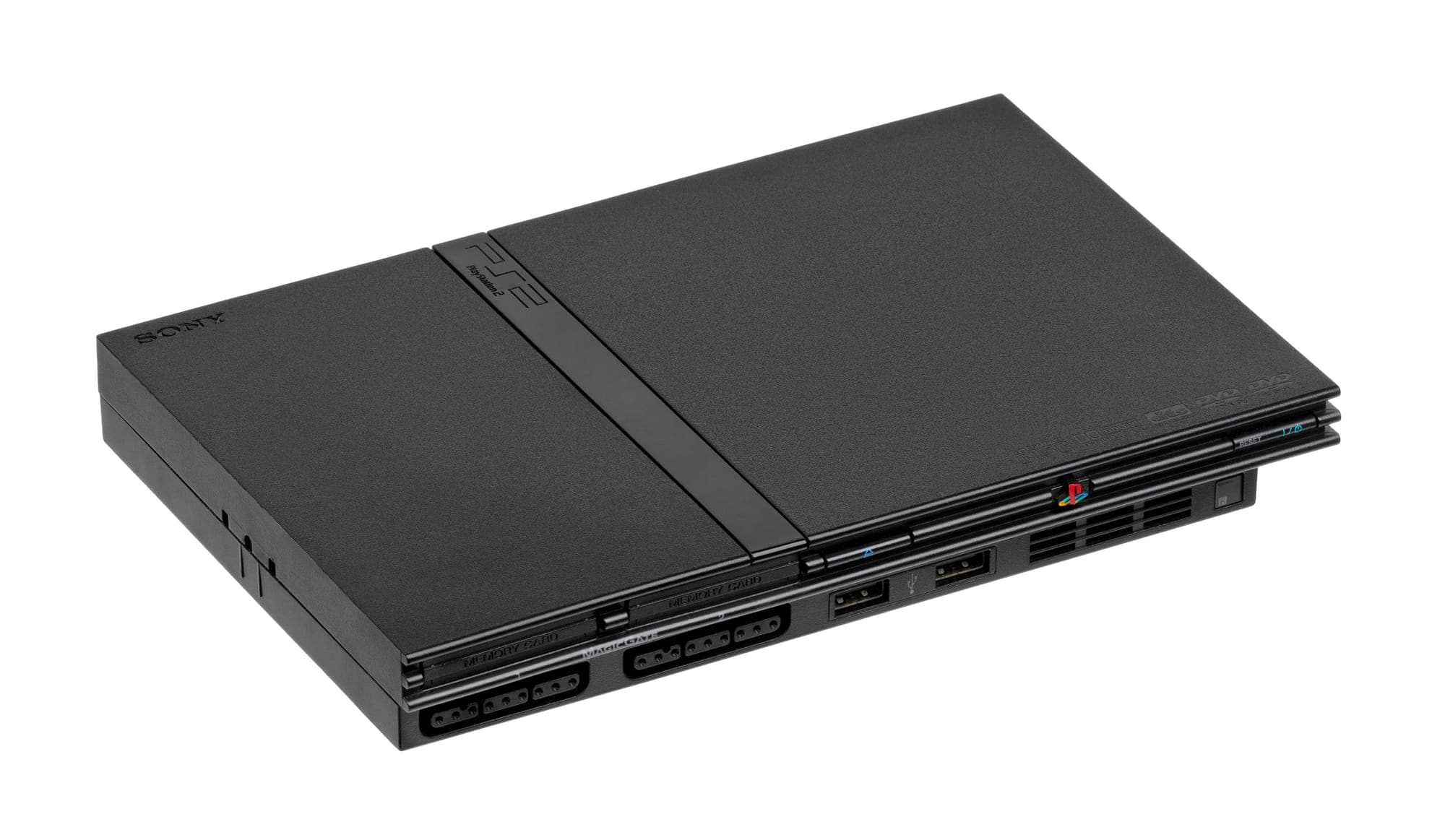
How to Collect PlayStation 2 Without Drowning in Shovelware
Take a blue-bottomed disc with you to the next retro fair. A worn PS2 laser will keep reading silver DVD games for months after it starts failing on the blue CD pressings, so a console that boots the seller's copy of a big DVD-era title can still be quietly dying. Thirty seconds with a blue disc tells you more than any "tested and working" sticker ever will.
That test matters because the PlayStation 2 is still the most open door in collecting. It's the best-selling home console ever made, with a library that runs deeper than any other machine's – thousands of titles across NTSC-U, PAL and Japanese releases. Nobody is completing that set, and that's the good news. The abundance keeps prices sane and thins the crowd, which means a collector with a clear theme can build something excellent without fighting anyone for it.
Fat or slim: buy the machine your collection actually needs
The original fat PS2 has the expansion bay – the slot that takes the network adapter and an internal hard drive. If your theme touches Final Fantasy XI or the handful of HDD-aware titles, a fat console is non-negotiable. Within the fats, the SCPH-50000 family is the sweet spot: it added an infrared receiver for the DVD remote and shipped after Sony had ironed out most of the disc-read-error gremlins that plagued the earliest boards.
The slim (SCPH-70000 onward, from 2004) trades the bay for built-in Ethernet and a footprint barely thicker than a DVD case. One catch: from the SCPH-75000 revision, Sony reworked the console's internals, and a small number of PS1 and PS2 titles misbehave on those later boards. If broad backwards compatibility matters to you, stick with late fats or that first slim revision.
Blue bottoms, silver bottoms, and the laser test that actually matters
PS2 games shipped on two formats: CD-ROM with that unmistakable deep-blue underside, and standard silver DVD. Blue discs cluster in the console's early years and its budget ranges; the marquee late-era games are almost all DVDs. Crucially, the two formats stress the laser differently – which is why tired optics give up on blue discs first.
So the buying ritual is two steps, in order:
- Boot a silver DVD title. This only proves the console is alive.
- Boot a blue CD title. This proves the laser still has headroom.
- Listen while it loads – repeated clicking and re-seeking on the blue disc is the sound of a laser on its way out.
Sellers rarely test with blue discs. Not malice – most of the famous library is silver. Bring your own.
Themes beat completionism: lanes worth claiming
With a library this size, a focused theme is the difference between a collection and a pile of shovelware. Some lanes that reward digging:
- Developer runs. Everything Team Ico (Ico, 2001; Shadow of the Colossus, 2005), or the short, brilliant Clover Studio catalogue (Okami and God Hand, both 2006). Small sets, huge payoff.
- Light-gun games. Namco's GunCon 2 ecosystem – Time Crisis 2, Time Crisis 3, Vampire Night, Ninja Assault – is a complete, displayable niche with the peripheral itself as the centrepiece.
- Licensed games that turned out great. The Simpsons: Hit & Run (Radical Entertainment, 2003) headlines a surprisingly deep category most collectors dismiss on principle.
- Dead-server time capsules. Capcom's Resident Evil Outbreak and Outbreak File 2 shipped with online play whose servers are long gone – the discs are the last physical artefacts of that whole experiment.
Hardware is a lane too. Beyond the standard black, PAL territories got the Satin Silver in both fat and slim form, plus Ceramic White and pink slims, while Japan kept the best for itself – the Ocean Blue fat and the Automobile Color Collection, a run of consoles finished in car-paint colours. Variants are still reasonably findable, which won't stay true forever.
The traps: swap cases, bleached spines, lying lasers
PS2 games live in ordinary DVD keep cases, and that's the trap: a cracked original gets swapped for a generic shell or a scuffed ex-rental case without a word in the listing. Check that the cover insert is a crisp original print, that the manual matches the region, and that the case isn't wearing rental-sticker scars.
Spines are the other silent killer. The blue PlayStation 2 banner fades badly in sunlight, and a shelf of bleached, pale-grey spines is worth far less than the fronts suggest. When buying online, ask for a straight-on photo of the spine – sellers photograph the front because the front is what survived.
And remember the laser. Plays GTA fine is not a health report; it's a statement about silver discs only.
Here's the hot take: the PS2 is the last console library big enough to get lost in and still cheap enough to explore on a whim. The window where you can afford to be choosy – original cases, unfaded spines, strong lasers – won't stay open forever. Pick your lane before it gets crowded. Which one are you claiming?


