 Back
Back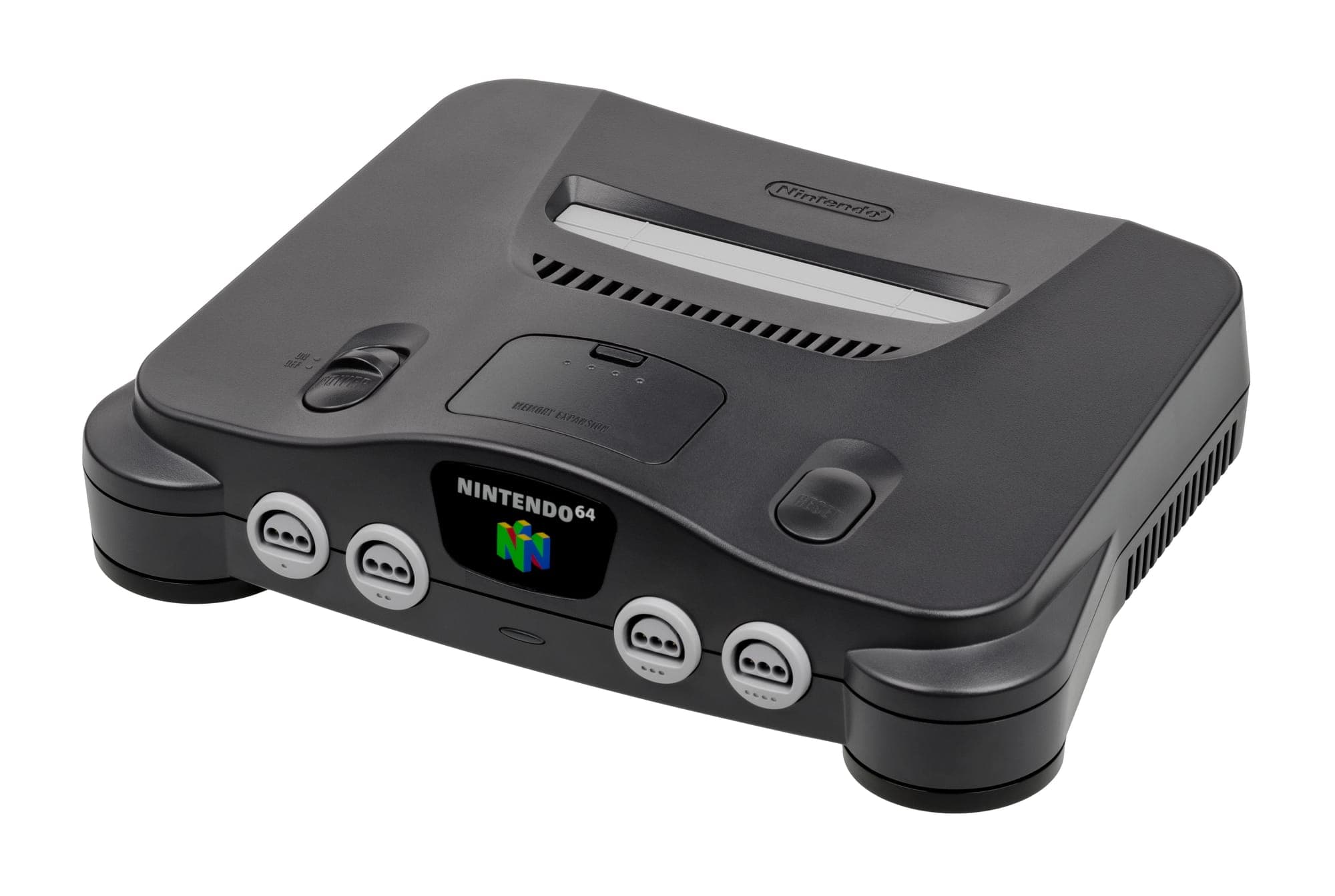
The Nintendo 64's Cartridge Gamble Still Haunts It
Sony had already shipped the PlayStation for over a year by the time the Nintendo 64 hit North America in September 1996. Nintendo turned up late, more expensive to develop for, and stubbornly clinging to cartridges while everyone else had moved to CD-ROM. And yet it produced some of the most influential games ever made. That contradiction is the whole story of the machine.
Why Nintendo bet on cartridges when the world went optical
The N64's silicon came from a partnership with Silicon Graphics, whose workstations were rendering dinosaurs for Jurassic Park around the same era. That pedigree showed: hardware-accelerated 3D, real-time texture filtering, anti-aliasing that gave N64 games their signature soft, slightly blurry look. It was genuinely ahead of the PlayStation on paper.
Then came the cartridge decision. Nintendo stuck with ROM carts for near-instant load times and anti-piracy peace of mind, but the trade-off was brutal. Cartridges maxed out at a fraction of a CD's capacity and cost far more to manufacture. That's the reason Squaresoft took Final Fantasy VII to the PlayStation, taking the entire JRPG genre with it. Nintendo won the loading-screen war and lost the third-party war.
The controller was its own act of madness. That three-pronged design nobody quite knew how to hold, built around an analog stick that, in 1996, felt like the future. The stick's mechanism wore out with heavy use, especially if you were a Mario Party thumb-slammer, and worn sticks are still the single most common fault you'll find in the wild.
Three games that justified the whole machine
A short library, but a dense one. The N64 didn't have breadth, it had heavyweights that rewrote the rulebook.
- Super Mario 64 (1996) – the launch title that taught the industry how a 3D platformer should control. That analog stick suddenly made sense the moment you had Mario tiptoe versus sprint.
- The Legend of Zelda: Ocarina of Time (1998) – Z-targeting solved the problem of combat in 3D space, and half the action-adventure games of the next decade quietly copied it.
- GoldenEye 007 (1997) – Rare turned a movie tie-in into the console FPS blueprint and, more importantly, the reason four people crammed onto one sofa yelling about no Oddjob.
Add Banjo-Kazooie, Mario Kart 64, and Perfect Dark and you've got the core of why people still hook these up. The N64 was a couch console before splitscreen was a nostalgia bullet point.
The argument that never dies: four-player split versus expansion pak
Enthusiasts still bicker over what the N64 actually was. Was it the multiplayer machine defined by four built-in controller ports, or a technical curiosity hamstrung by its own hardware quirks? The four ports were a masterstroke, no competitor matched them out of the box. But the fog, the draw distance, the muddy textures were all consequences of tiny cartridge space and limited texture cache, not raw power.
Then there's the Expansion Pak, the little RAM upgrade that Donkey Kong 64 and the high-res mode in Perfect Dark demanded. Some collectors treat it as an essential part of a complete setup; others see it as evidence Nintendo shipped the console under-specced. And don't get people started on the 64DD, the Japan-only disk drive add-on that flopped so hard it's now a genuine grail item. Every one of these debates comes back to the same root: brilliant ideas fighting a storage ceiling.
Where the N64 sits in the collector market now
Loose consoles remain some of the most affordable retro hardware you can buy, largely because Nintendo sold them by the millions and the plastic is nearly indestructible. The money is in the margins:
- Boxed CIB consoles with intact styrofoam and manuals command a real premium over loose units, because that packaging got binned in most households.
- Sealed or mint first-party games – Conker's Bad Fur Day and the later, lower-print titles climb hardest.
- The oddball peripherals – Transfer Pak, the Rumble Pak, and anything 64DD-related fetch prices that dwarf the console itself.
Watch out for the controllers. A tight, un-worn analog stick is worth paying up for, and plenty of sellers list "working" pads that flop around like overcooked noodles. Third-party replacement sticks exist, but purists want the original GameCube-style gate feel that the N64 never quite had.
Here's my honest take: the N64 is the most fascinating failure-that-wasn't in Nintendo's history. It lost the generation commercially, alienated the developers who'd build the next era of gaming, and still produced a run of games that people happily pay to replay 25 years later. Would it be the beloved object it is today if it had used CDs and kept Squaresoft on board? Or is the scarcity, the quirks, and the cartridge stubbornness exactly why we still care? I know where I land. Where do you?


