 Back
Back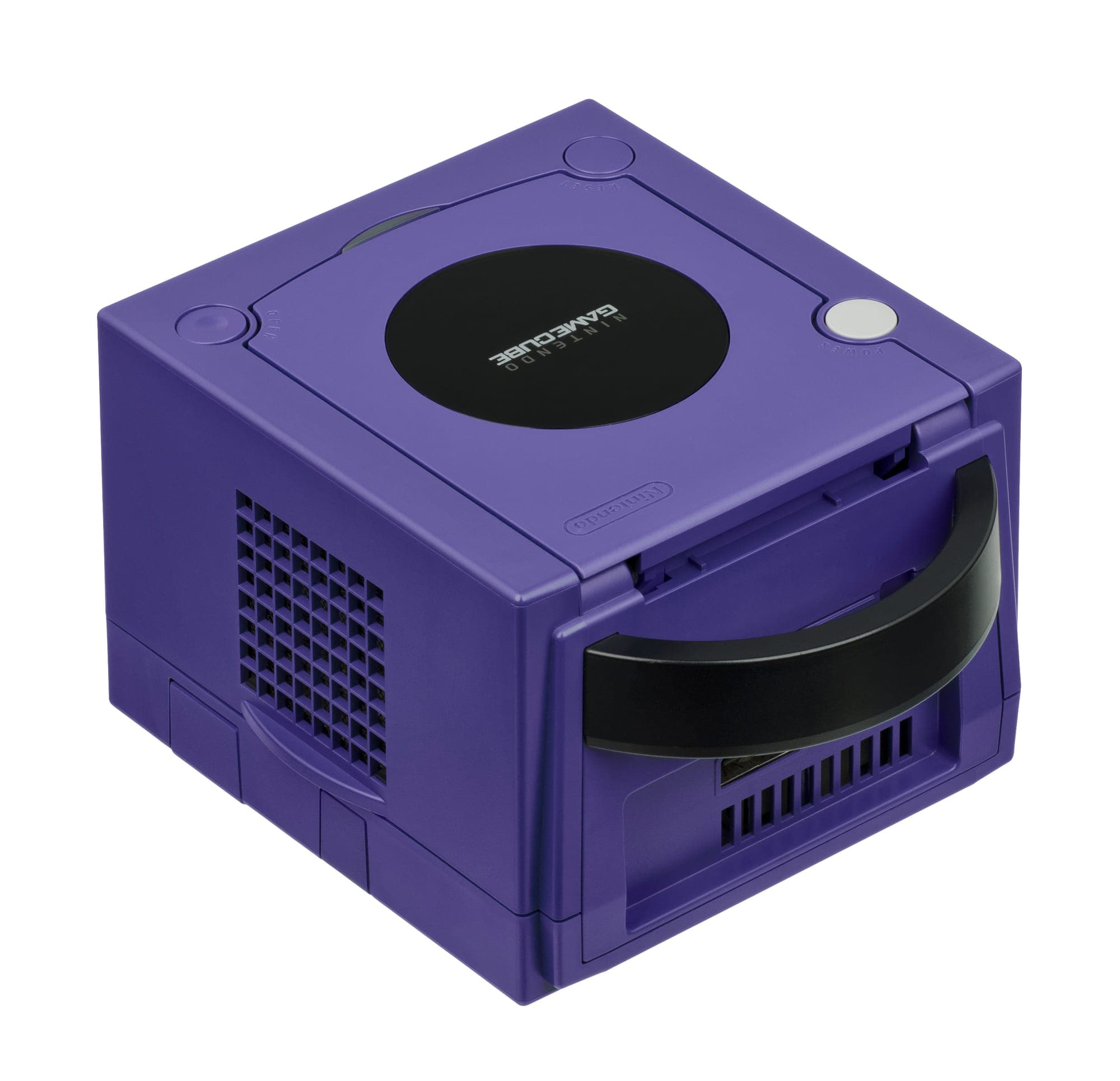
Decoding RGB, SCART and Mod Chips in GameCube Listings
A seller somewhere is asking a serious premium for a GameCube because of one square port on the back panel – and if you can't explain why, the listing was written in a language you don't speak yet. Retro hardware descriptions are dense with jargon: RGB, recapped, region-free, line doubler. None of it is decoration. Every term changes what the console does, what it's worth, and whether it's still the machine that left the factory.
Composite, S-Video, RGB: the cable pecking order
All three describe how the console gets a picture to your screen, and the gap between them is enormous. Composite is the yellow RCA plug – the entire video signal crammed down one wire, which is why it looks like someone smeared Vaseline on your CRT. S-Video splits brightness and colour onto separate lines, an immediate and obvious upgrade. RGB goes further and sends red, green and blue individually – about as clean as analog video gets.
In Europe, RGB usually travels through SCART, the chunky 21-pin connector on the back of PAL-region TVs. Here's the GameCube trap: PAL consoles output RGB over SCART but not S-Video, while NTSC consoles (US and Japan) output S-Video but no analog RGB at all. So an American GameCube listed "with RGB cable" is either using the digital port – more on that below – or the seller is confused. Either way, ask.
The port Nintendo deleted, and why DOL-001 matters
Early GameCubes, model number DOL-001, carry a second video output called Digital AV Out. The later DOL-101 revision removed it to cut costs. That little port is the whole ballgame: it's the only route to the console's best signal, and it's why two otherwise identical purple boxes can sit at wildly different prices.
Nintendo's official component cable (DOL-010) plugged into it, with a digital-to-analog converter chip hidden inside the plug itself. It was sold in modest quantities, largely through Nintendo's own store, and today it routinely costs more than the console it connects to. The modern answer is a plug-in HDMI adapter built on the open-source GCVideo project – the Carby and EON's GCHD are the names you'll see. Crucially, these attach like any other cable; the console stays factory-original.
Two related terms travel in the same circles:
- Line doubler – a device like the OSSC that takes a low-resolution analog signal and doubles the scanlines for a modern display with essentially no added lag.
- Upscaler – a more elaborate scaler, like the RetroTINK family, that resizes and processes the image for flat panels. Without one, most analog consoles look genuinely bad on a modern TV, whose built-in scaler was never designed for them.
Why bother? Progressive scan, mostly. Plenty of NTSC GameCube discs offer 480p if you hold B while a game boots with the right cable attached. And accessories like the Game Boy Player are transformed by it – paired with the homebrew Game Boy Interface software, that bottom-mounted add-on becomes one of the sharpest ways to put Game Boy Advance games on a big screen.
Which words mean someone has been inside the console
This is the part that matters if you care about factory-original hardware. Some terms are just cables and accessories; others mean the case has been cracked open and a soldering iron has visited.
- Mod chip – a small board soldered inside, like the XenoGC on the GameCube's disc drive, typically enabling backups and ignoring region locks. Definitively modified.
- Region-free – ambiguous, so ask. It can mean a mod chip (modified) or a boot disc like Datel's FreeLoader (completely non-invasive). A PAL copy of Resident Evil 4 won't boot on an NTSC console without one of the two.
- Recapped – the electrolytic capacitors have been replaced. That's maintenance rather than enhancement, and on ageing boards it's often the sensible move – but the board has been reworked, and strict originality collectors count it.
- Internal HDMI mod – a GCVideo board permanently installed inside, usually on consoles that lack the digital port. Great for players; not original.
- FPGA – hardware recreated on a programmable chip, as in the MiSTer project. This isn't a modified GameCube at all; it's a different machine imitating one at the circuit level, which is also what separates it from software emulation.
The one question that settles every listing
None of these words are red flags on their own. A XenoGC-chipped GameCube with an internal HDMI board is a superb player's console; an untouched DOL-001 with the official component cable is a collector's piece. Trouble only starts when a listing blurs the two. So ask the seller one question before anything else: has this console been opened? Everything in this glossary sorts neatly into the two possible answers – and a seller who can't tell you which side their console falls on hasn't earned the price they're asking.


