 Back
Back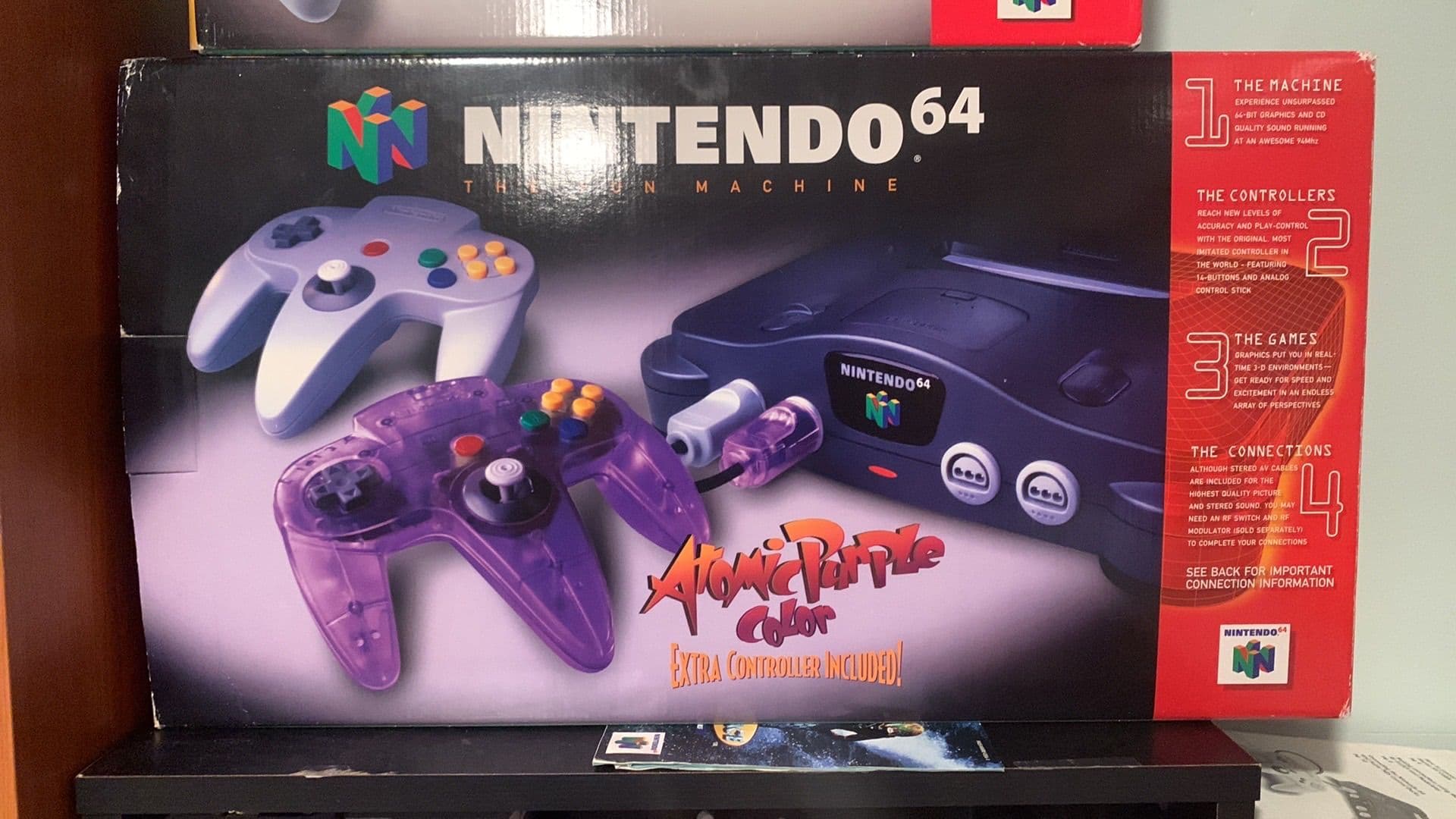
The Atomic Purple N64 Is the Clear Console Everyone Wants
Hold a translucent Atomic Purple Nintendo 64 up to a window and you'll see exactly why collectors keep bidding these up: the smoky-clear shell shows off the board, the heat sink, the whole industrial guts of a 1996 console Nintendo usually hid behind grey plastic. It's the same NUS-001 hardware inside every other N64, but the funhouse-clear casing turned an ordinary console into a shelf piece. Right now it's one of the fastest-moving N64 variants changing hands.
Why the clear shell is spiking now
Translucent hardware is having a moment across the board. The Game Boy Color Atomic Purple, the clear GBA, the see-through PS1 debug units, they've all crept up as the mid-90s to early-2000s translucent era becomes the thing 30-something buyers grew up wanting and can now afford. The N64 is the natural centrepiece of that shelf.
The funhouse/clear variants were never as common as the standard charcoal console, and plenty of them got played to death by kids who thought the see-through look was the coolest thing on the planet. Clean examples with an unclouded shell are getting genuinely hard to find, and that scarcity is doing the usual thing to prices.
A loose console in rough shape is still an affordable entry point. Where the money climbs is a complete, boxed setup with the matching pak and cables. If you want the full bundle experience, a boxed Atomic Purple N64 bundle is exactly the configuration that holds and gains value, versus a bare console rattling around in a drawer.
Condition traps that bite buyers
Clear plastic is unforgiving. Every flaw a solid-colour shell would hide, this one broadcasts. Before you commit, look hard at:
- Yellowing. Translucent purple can shift toward a muddy amber with UV exposure. Some of it retro-brightens out, some doesn't. Uneven yellowing between the top and bottom halves is a red flag.
- Interior dust and haze. Because you can see inside, grime on the board and dust trapped under the shell tank the display value in a way it never would on a grey unit.
- Stress cracks around the screw posts and cart slot. Clear plastic gets brittle, and hairline cracks show up under angled light.
- Mismatched hardware. Sellers occasionally pair a clear top shell with a standard-coloured bottom. Check both halves match.
Region matters for the setup, not the shell colour. A PAL NUS-001 runs 50Hz and wants the right power brick and RF/AV lead; an NTSC or Japanese unit won't play nicely on a European TV without the correct cables. Confirm which region you're buying and that the power supply matches.
Don't forget the paks the bundle needs
An N64 without its expansion paks is only half a machine. The console shipped with a Jumper Pak that has to sit in the expansion slot for the thing to boot at all, and losing it is more common than you'd think. A correct original Jumper Pak is cheap insurance against a dead-on-arrival console.
The Rumble Pak is the other one people chase, partly for nostalgia and partly because Star Fox 64 and GoldenEye feel wrong without it. These take two AAA batteries, and corrosion in the battery bay is the single most common thing that kills them, so pop the door and check before you pay.
Repros, fakes and what to actually pay
Full console fakes aren't really a problem here; nobody's mass-producing counterfeit N64s. The risk is the reverse: aftermarket clear-purple replacement shells are widely sold, so a "mint" Atomic Purple unit might be an ordinary console dressed in a new third-party housing. Genuine funhouse shells have the moulded Nintendo markings and the slightly softer smoke tint; crisp, over-saturated new-plastic purple is a tell. Ask for photos of the underside label and the serial.
Boxes are where the real money and the real fakery live. Reproduction N64 boxes and inserts are common and often convincing in photos. Genuine outer boxes show honest shelf wear, correct regional print, and age-appropriate cardboard colour. If the box looks whiter and sharper than the console it holds, be suspicious.
For a clean, tested example, it's worth buying from a seller who knows retro hardware rather than a random flip. Danish shops like DKretro.dk and DSKongen.dk both carry N64 hardware and accessories on Golisto, so you can check current stock and condition notes before committing.
Here's my honest take: buy the console you'll actually display, not the one a grader stamped a number on. A boxed Atomic Purple with a matching Rumble Pak and a shell that still catches the light is worth chasing. A sun-baked, hazy one at a premium price is a pass, no matter how rare the seller swears it is. Would you retro-brighten a yellowed clear shell, or does that cross the line into ruining it?


