 Back
Back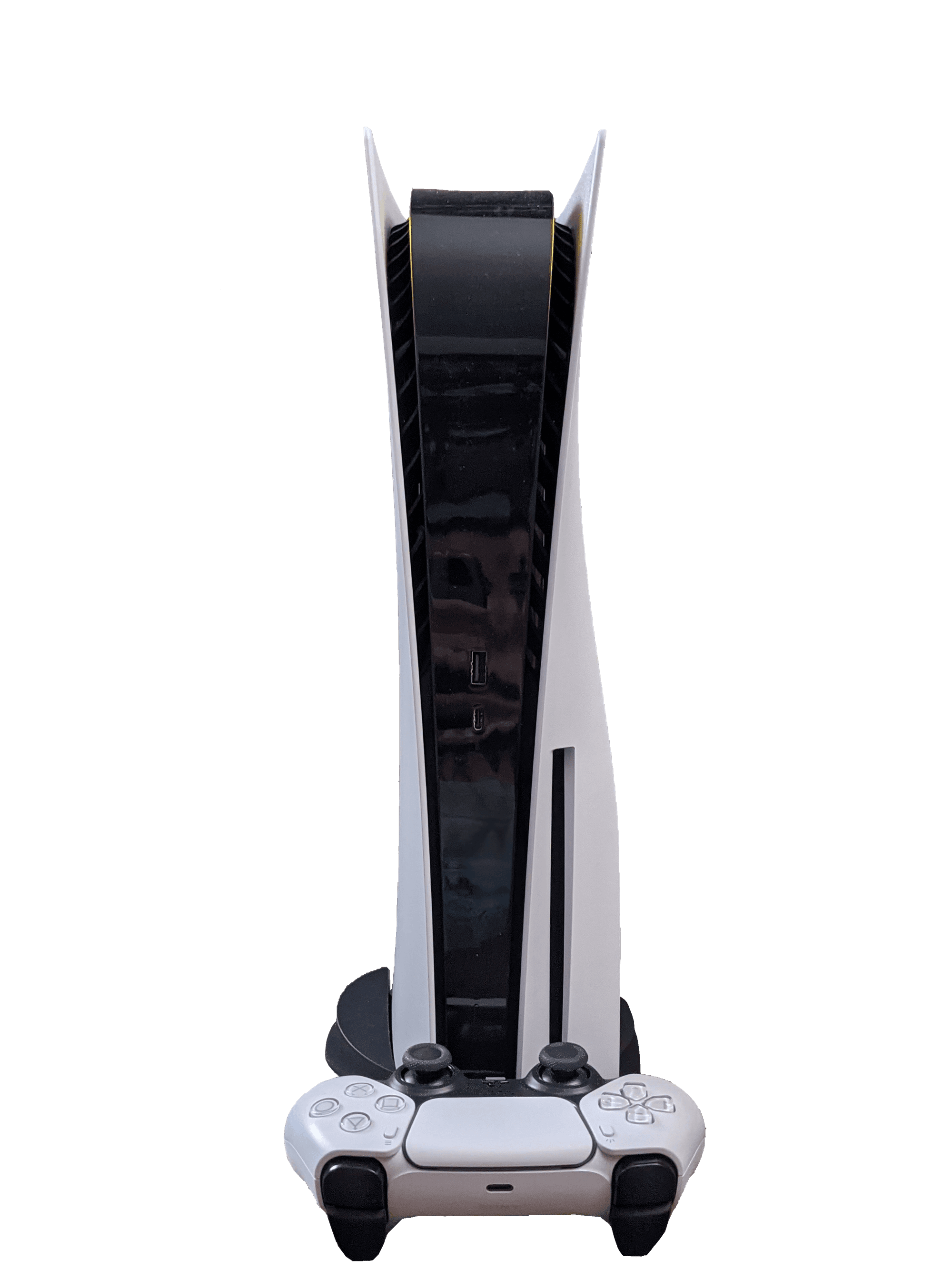
What to Keep From the PS5 Era Before It Becomes Retro
Collectors who hunt first-generation PlayStation hardware don't ask about colours or bundles – they ask for a model number. The one they want is the SCPH-1001, the early US PlayStation with RCA jacks on the back that audiophiles later discovered made a genuinely lovely CD player. Nobody knew that in 1995. They just binned the box like everyone else.
That's the quiet tragedy of every PlayStation generation, and the PS5 is following the script beat for beat. The good news: you don't need to speculate on anything. You just need to stop throwing things away.
The launch console is always the weird one
Sony ships its most interesting hardware first, then cost-reduces it. The 60GB launch PS3 kept PS2 backward compatibility that later revisions dropped entirely. The original PlayStation lost those RCA outputs within a few revisions. The strange, generous decisions live in the first run.
The PS5 repeats the pattern precisely. The launch CFI-1000 series is the biggest, heaviest version, with a cooling assembly the later CFI-1100 and CFI-1200 revisions visibly trimmed. Then came the CFI-2000 Slim, whose detachable disc drive needs an internet connection to pair on first setup – a small detail with a long shadow, because a drive that must phone home depends on a server still existing.
If you own a launch unit, that's the one to keep boxed and complete. Not because it's special today, but because in every previous generation, the launch revision is the one people ended up writing forum essays about.
Disc vs Digital Edition decides who gets to collect at all
The PS5 is the first PlayStation generation split at the till: one console that takes discs, one that structurally cannot. A Digital Edition library lives on an account and a storefront – and Sony already previewed how that ends when it announced the closure of the PS3 and Vita stores in 2021, then partially walked it back after the outcry. A digital library doesn't get inherited, traded, or found in a loft.
The split also shrinks physical print runs, because a large share of the install base can't use a disc even if they wanted one. Small pressings of mid-tier and niche titles are exactly where past generations produced their oddities – the kind of low-print release a sealed copy of Battle of Rebels represents, quietly hard to find once the pressing stops.
On the games side, three things are worth shelf space:
- Launch-window discs – cross-gen titles like Call of Duty: Black Ops Cold War and Assassin's Creed Valhalla mark the exact moment the generation began, first prints especially.
- Small-run physical releases – the niche games that barely got a pressing at all.
- First-party physical exclusives – Bluepoint's Demon's Souls remake was on shelves at launch; Astro's Playroom, pre-installed on every console, never was. That asymmetry is the story of this generation.
Collector's editions: read the fine print, not the blurb
Here's the trap this era invented: the collector's edition without the game. God of War Ragnarök's Jötnar Edition shipped with a download voucher instead of a disc – a box of beautiful physical objects orbiting a game that exists only as a code. Codes expire. Storefronts close. An artbook and a steelbook are forever; a voucher is a countdown.
So the rule for sealed collector's editions is simple: a CE is only as collectable as what's physically inside it. Confirm there's an actual disc before deciding something deserves to stay sealed. And only keep it sealed if you own a separate play copy – a collection you can't touch is a storage unit, not a hobby.
Matched from day one beats mint twenty years too late
Ask anyone assembling complete-in-box SNES or PS1 sets what hurts most. It's never the console – it's the polystyrene insert, the manual, the odd little cable nobody kept. For the PS5, future-you will be hunting:
- the serial-matched box with its inner trays and paperwork;
- the launch white DualSense that shipped with the console – the original, not a replacement bought later;
- the HDMI and USB-C cables, and above all the base stand and its screw – the PS5's answer to the missing RF adapter of retro lore.
The same logic applies to peripherals. Every generation's oddball first-party accessories – the Japan-only PocketStation on PS1, the EyeToy on PS2 – became the interesting artifacts precisely because they were short-lived. The PS5's candidates write themselves: PSVR2, the PlayStation Portal, the Access controller, the limited DualSense colourways. Sony's own 30th Anniversary PS5 Pro bundle, limited to 12,300 units in retro grey as a nod to PlayStation's 1994 debut, proves the company knows exactly which nostalgia buttons it's building for the 2040s.
Hot take to close on: the rarest PS5-era item in a few decades won't be a game at all. It'll be a boxed, unscuffed accessory that everyone bought, used for a month, and tossed – because games get shelved, but peripherals get abandoned. So before you flatten that Portal box for the recycling bin: which one are you betting on?


