 Back
Back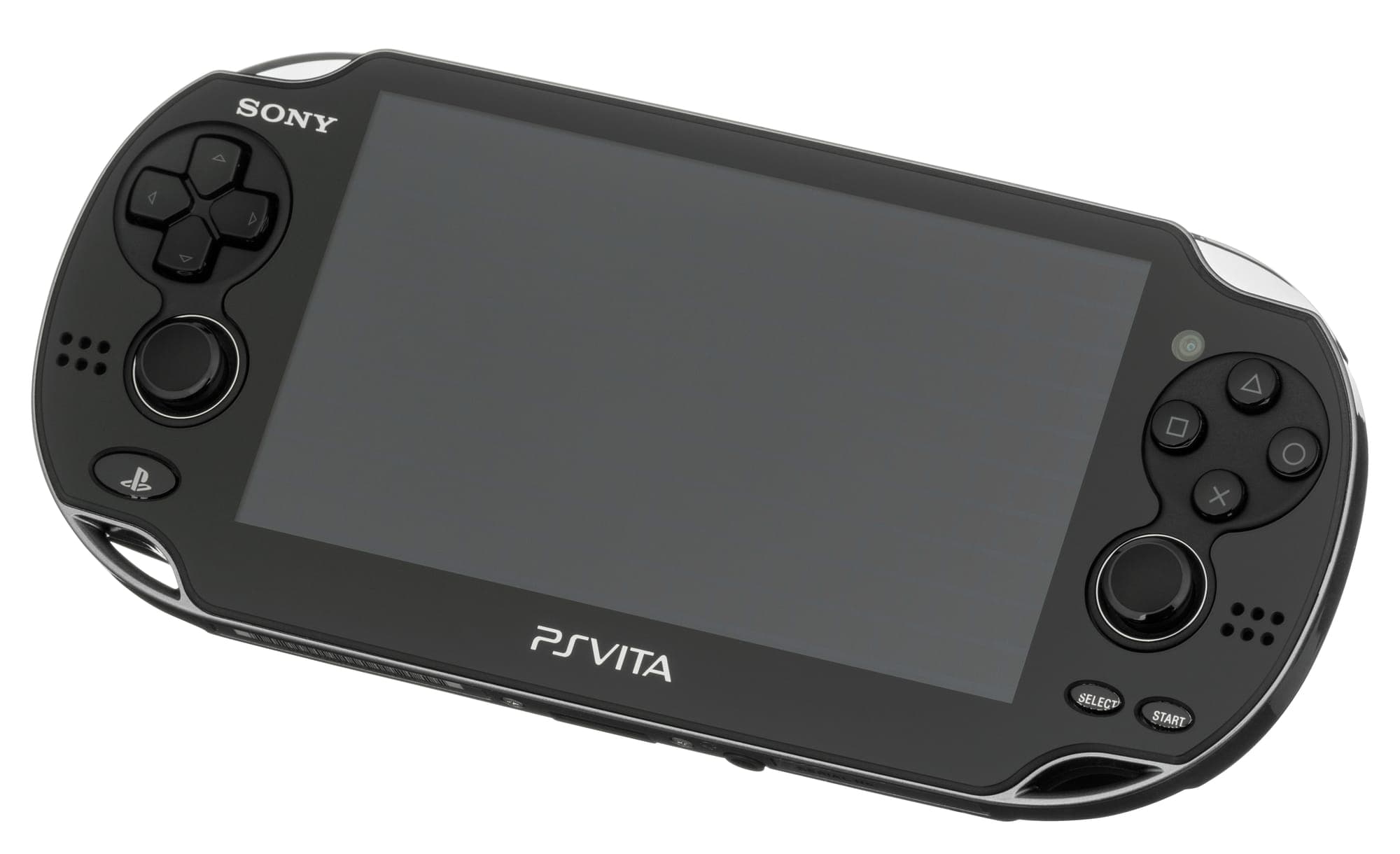
Why PS Vita Collecting Starts With the Memory Card
Every Vita collector has the same origin story: the console arrives, a copy of Persona 4 Golden clicks into the card slot – and the screen asks for a memory card you don't own, that hasn't been manufactured in years, and that costs silly money for the storage it offers. Welcome aboard.
The PlayStation Vita is the strangest collecting proposition Sony ever shipped: a commercial disappointment with a fanbase that treats it like a first love. The western physical library is small enough to feel finishable, the Japanese library is deep enough to swallow you whole, and every part of the hobby funnels through one proprietary accessory.
OLED 1000 or LCD 2000 – the first argument you'll have
There are two mainline models, and the choice is a genuine trade-off, not a straight upgrade. The original PCH-1000 (2011 in Japan, 2012 in the west) carries a 5-inch OLED panel that still looks spectacular – deep blacks and saturated colour that flatter Gravity Rush and Muramasa Rebirth like nothing else. The catch: it charges through a proprietary connector, so a missing cable is a real problem, not a shrug.
The PCH-2000 “Slim” (2013) swaps OLED for LCD, and purists have never forgiven it. In exchange you get micro-USB charging, a lighter shell, longer battery life, and 1GB of internal storage – enough to boot the console and save a game before you've bought a card. If you play more than you display, the 2000 is the sensible choice. Nobody buys a Vita to be sensible.
The memory card is the real price of entry
Sony rejected microSD and built its own format: proprietary Vita cards in 4, 8, 16 and 32GB sizes, plus a 64GB card that only ever released in Japan. They've been out of production for years, the supply only shrinks, and prices behave accordingly – it's completely normal for a decent card to cost more than the game you bought it for.
The card isn't optional, either. Most retail games write saves and patches to it, digital titles live on it, and each card ties itself to a single PSN account – switch accounts and the console demands a format. That one design decision, more than the hardware or the games, is what gatekeeps the platform.
It's also where the fakes live. Counterfeit Vita cards are everywhere: flash that misreports its capacity and quietly corrupts your data once you cross the real limit, sealed in convincing Sony-style packaging. You'll also see SD2Vita adapters – community-made microSD adapters for modified consoles – listed as “official 256GB Vita memory cards.” Sony never made a card bigger than 64GB. If the capacity sounds generous, it isn't a Sony card.
What “complete” actually means in a Vita case
Here's what trips up collectors migrating from older platforms: CIB doesn't mean box, manual, and inserts, because Vita games shipped without printed manuals as standard. A complete western copy is the case, the cart, and whatever slip of paper – usually a DLC voucher or a safety leaflet – the publisher bothered to include. Don't pay a premium for a “rare manual” that never existed.
The flip side: because the case is most of the presentation, the reprint case is this platform's signature scam. Vita cases are small, simple, and easy to reproduce with a freshly printed cover insert, so loose carts get promoted to “boxed” copies all the time. Slow down and check:
- Cover art that looks soft, over-saturated, or slightly off-centre – the classic tells of a print-from-scan job
- Region mismatches, like a Japanese cart sitting in a case wearing PEGI or ESRB ratings artwork
- A spotless case around a clearly well-travelled cart – plastic ages, and mismatched wear deserves questions
A small western shelf, a bottomless Japanese one
The western retail library is compact enough that a full PAL or NTSC-U set is a realistic long-term project, which is rare air in modern collecting. And it skews wonderfully weird: the Vita became the home of visual novels, rhythm games, and dungeon crawlers after the big publishers drifted away. Cult carts like Virtue's Last Reward – the middle chapter of the Zero Escape trilogy – and SuperBeat Xonic, from the lineage of the DJMax rhythm series, are exactly the sort of games that define a Vita shelf.
Better still, the Vita is region-free for physical games. Japanese exclusives aren't curiosities; they're a legitimate extension of your collection, and the Japanese library dwarfs the western one. Boutique publishers like Limited Run Games also kept printing short-run Vita physicals long after mainstream retail moved on, which is why so many late-era titles exist in tiny quantities with outsized demand.
Here's the honest take: the Vita didn't fail, it found its real audience after Sony stopped looking. If you're starting a collection today, do it in the right order – genuine memory card first, console second, games third. The games will still be there next year. The cards, increasingly, won't.


