 Back
Back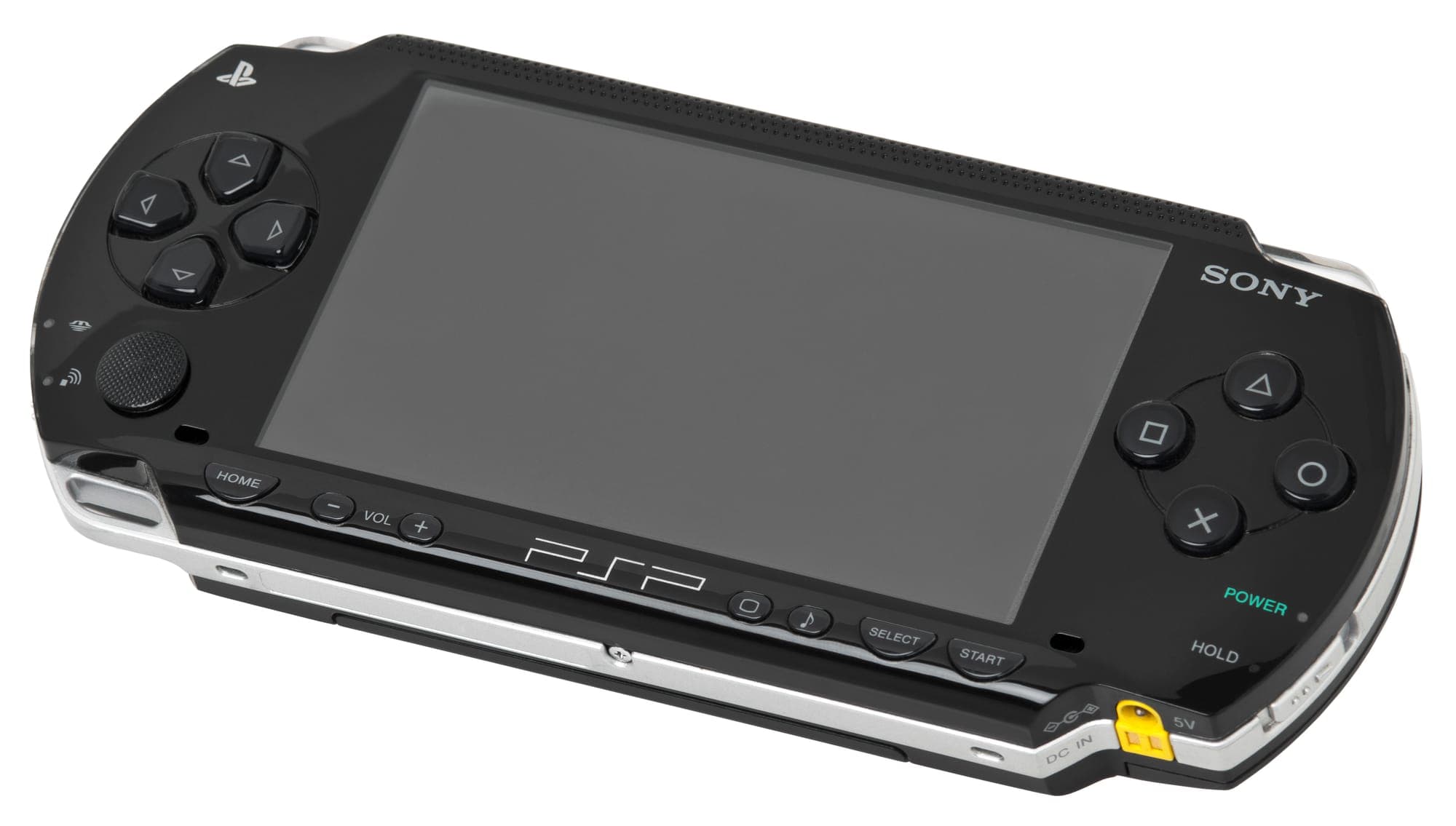
Why the PSP Is the Import Collector's Perfect Handheld
Pop the battery cover before you pay for any secondhand PSP. If the door sits proud of the shell, or the cell inside has puffed up like a tiny pillow, you're looking at a swollen lithium battery – and no amount of "tested, works great" in a listing makes that okay. The PSP is one of the most rewarding handhelds a collector can chase, but it pays back the people who check the right things. Let's get you there.
UMD, the format everyone laughed at, is now the point
The Universal Media Disc was peak mid-2000s Sony: a proprietary 1.8 GB mini-disc sealed inside a clear plastic caddy, readable by exactly one family of devices. It lost the movie war badly, and no other platform ever touched it. That failure is exactly what makes it collectable – the UMD library is closed, finite, and instantly recognisable on a shelf.
The discs are tougher than they look because the caddy shields the data surface, but the caddies themselves crack. Check for split seams and loose shutters. And learn the split rule early: UMD movies are region-coded, UMD games are not. That second half changes everything about how you collect this machine.
1000, 2000, 3000 or Go – which PSP should you hunt?
The PSP-1000 launched in Japan in December 2004 – the heaviest model, with a screen that ghosts in fast motion, but unmistakably the original. The PSP-2000 "Slim & Lite" arrived in 2007, cut the bulk, doubled the RAM to 64 MB and added TV output. The PSP-3000 followed in 2008 with a brighter panel, richer colour and a built-in microphone; the faint interlacing shimmer you'll see in motion on a 3000 is a known quirk of that screen, not a defect, so don't let anyone price it as damage.
Then there's the PSP Go (N1000, 2009): no UMD drive at all, 16 GB of internal storage, a slide-out control pad and Bluetooth. Collectors either dismiss it as the black sheep or prize it as the boldest hardware Sony shipped in the whole line. Both camps have a point, which is why it's the most argued-about PSP at any retro meet. (The PAL-market PSP-E1000 "Street" from 2011 – no Wi-Fi, mono speaker – is strictly a completionist's buy.)
Region-free games make Japan your library too
Because UMD games carry no region lock, a Japanese copy plays on a PAL or NTSC console exactly like a local release. That single fact makes the PSP a first-class import platform rather than a modder's project. And Japan got the deepest cut of the catalogue: Monster Hunter Portable 3rd was a phenomenon there and never officially left the country, and Final Fantasy Type-0 stayed Japan-only on the PSP itself. Stack on the rhythm games and visual novels that never crossed over, and imports aren't a side quest – they're half the library.
The practical rule: action games import beautifully, while menu-heavy RPGs will test you unless you read Japanese. A CyberConnect2 brawler like this Japanese pressing of Naruto Shippuden: Ultimate Ninja Impact is a low-risk way in – the language barrier barely registers once you're playing.
The five-minute inspection that saves a bad deal
These machines are around two decades old, and their failure points are well mapped. Before money changes hands, work through the list:
- Battery first. A swollen cell can warp the shell from the inside and is a genuine safety issue – pull it, never recharge it, and hand it in for battery recycling. The 1000, 2000 and 3000 all run fine from the AC adapter with no battery fitted, so a missing battery is acceptable; a puffy one left inside is not.
- UMD door and drive. Open and close the door, check the hinge and latch, then load a disc and listen. Grinding noises or endless re-read attempts point to a tired laser.
- Screen. The plastic faceplate scratches far more easily than the LCD beneath it. Faceplate scratches are cheap to sort; damage under the plastic isn't.
- Case inserts. A genuinely complete game means case, cover insert and manual. Disc-only copies in scuffed cases are everywhere, and listings love to call them "complete".
- Third-party parts. Aftermarket shells, buttons and suspiciously "high-capacity" batteries flood the parts market. Glossier plastic, misaligned seams, missing logo etching and an oddly warm screen tint are the usual tells that a unit has been rebuilt and listed as all-original.
Bundles are still the best hunting ground – mixed lots like this PSP and DS games listing are exactly where clean UMDs hide behind one blurry photo. And a closing hot take: the PSP Go wasn't a failure, it was a prophecy. Sony shipped a digital-only handheld years before the world was ready, and the collectors who mocked it loudest are now the ones hunting boxed units. So which are you – caddy loyalist or Go apologist?


