 Back
Back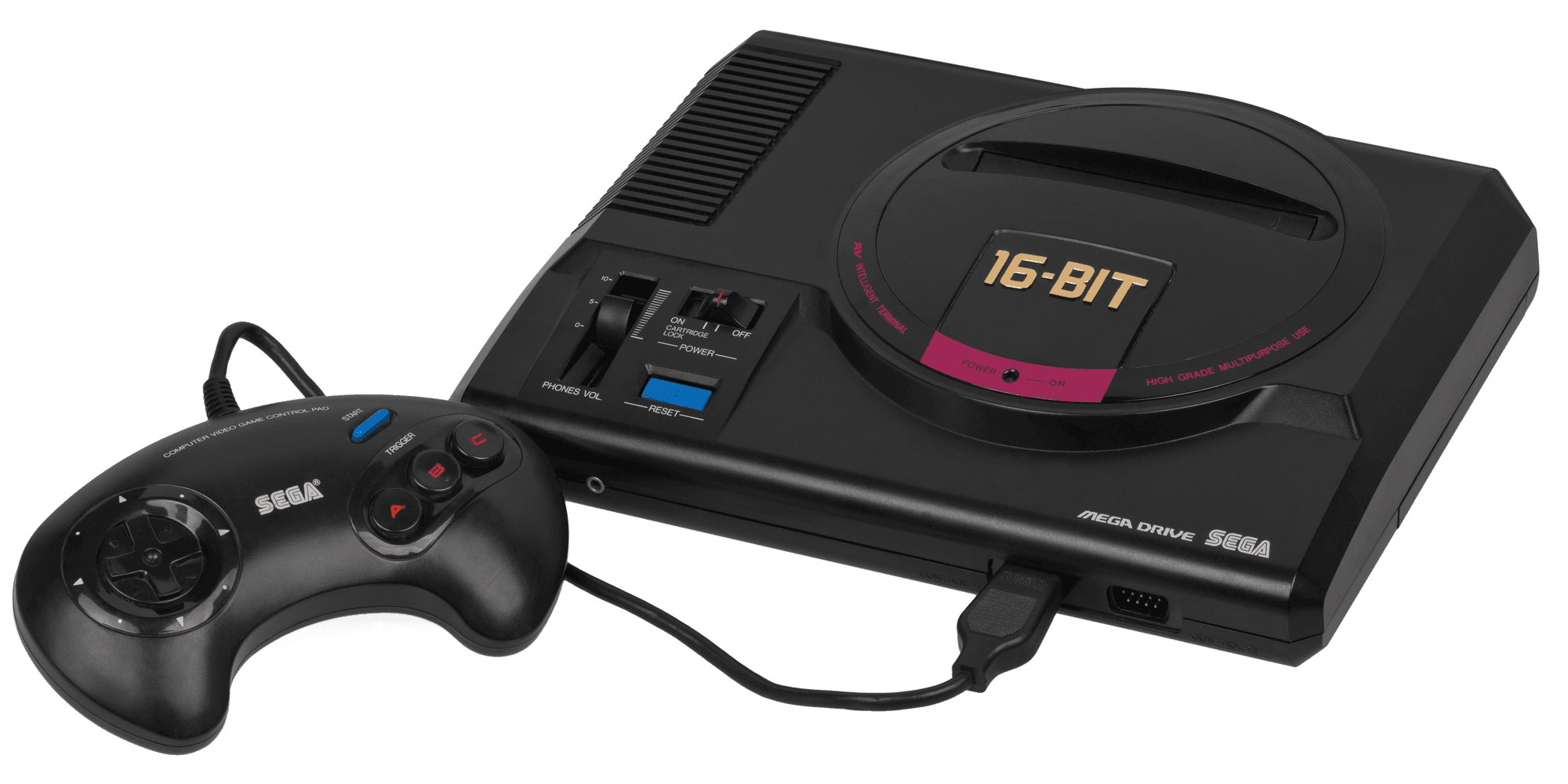
Boxed vs Loose Mega Drive Games and the Clamshell Advantage
Put a PAL clamshell of Streets of Rage 2 next to a US copy of John Madden Football and you're looking at the same console's library ageing in two completely different ways. One is a hard plastic case that has shrugged off three decades of shelves, house moves, and attic summers. The other is a cardboard box that creases if you stack anything on it. Understanding that split is most of what you need to know about Mega Drive pricing.
The clamshell was Sega's accidental gift to collectors
When Sega launched the Mega Drive in Japan in 1988 – and brought it to North America as the Genesis in 1989, after a trademark tangle over the name – most of its games shipped in rigid plastic clamshells with a printed paper sleeve tucked under the plastic. Nintendo, meanwhile, was still packing NES and SNES games in cardboard.
That one packaging decision reshaped the collecting market decades later. Cardboard got crushed, torn, and binned; clamshells survived. Complete-in-box Mega Drive and Genesis games are, as a rule, far more common than their Nintendo contemporaries, so the boxed premium over a loose cart tends to be gentler. A loose Sonic the Hedgehog 2 cart is one of the most common objects in retro gaming – the clamshell, sleeve, and manual are what you're actually paying for.
Clamshells aren't invincible, though. Hinges crack, the tabs holding the sleeve snap, and sun-faded spines are everywhere. Worse for buyers: because the cases are generic, sleeves and manuals get shuffled between cases constantly, and reproduction sleeves circulate. A CIB listing is only as good as its weakest component.
Cardboard is where the Genesis money hides
Not every US release got the clamshell. Electronic Arts famously did its own thing on the Genesis: taller cartridges with a yellow tab, sold in cardboard boxes – John Madden Football, Road Rash, Desert Strike, the lot. And toward the end of the console's life, a number of US releases quietly moved to cheaper cardboard packaging too.
These boxes age like NES boxes, which is to say badly. Crushed corners, split seams, price-sticker scars. A genuinely sharp cardboard box for a popular EA title is dramatically scarcer than the loose cart, and the market prices that scarcity in a way clamshell titles never see. If you're valuing a boxed Genesis collection, sort the cardboard from the clamshells first – they're different asset classes wearing the same logo.
Genesis, Mega Drive, and the cross-region price trap
Here's where buyers get burned: the same game exists as a US Genesis release, a PAL Mega Drive release, and a Japanese Mega Drive release, and their prices don't track each other. Compare listings without checking region and you'll either overpay or pass on a bargain.
- PAL copies are usually clamshells and survive well, so complete PAL copies can look cheap next to US cardboard. That's a supply difference, not a bargain alarm. Many PAL versions also run slower at 50Hz with borders, which is why some players pay extra to avoid them.
- Japanese Mega Drive releases come in smaller clamshells with distinctive spine art, and the cartridge shells are shaped differently – some console and cart combinations need an adapter, and a handful of games are region-locked in software.
- Cover art differs wildly between regions – same code, different artwork, different demand. A Japanese cover can carry a premium or a discount purely on aesthetics.
The rule: a sold price is only a comp if it's the same region, same packaging format, same completeness. "Mega Drive" and "Genesis" in a search bar are not interchangeable filters.
When to pay the boxed premium – and when loose is the smart buy
Pay up for boxed when the packaging is the scarce part: EA and late-run cardboard, complete copies of Treasure's Gunstar Heroes (1993), or licensed curiosities like RoboCop versus The Terminator, where clean survivors are thin on the ground. In those cases the box is the collectible; the cart is along for the ride.
Buy loose when you mainly want to play. Mega Drive carts are famously robust, common titles are abundant, and pairing loose carts with a well-kept Mega Drive console gets you the real 16-bit experience for a fraction of CIB money. Before paying any boxed premium, check:
- the sleeve is an original print, not a reproduction, and the spine isn't sun-faded;
- the manual matches the title and region – swaps are rampant;
- the hinge and sleeve tabs are intact;
- any inserts or registration cards the seller claims are actually in the photos.
My honest take: the Mega Drive is the best console in the hobby for owning it both ways – a shelf of loose players' carts, plus a short row of boxed titles you genuinely love. And if you insist your 50Hz PAL Sonic feels just fine – we believe you. Mostly.


