 Back
Back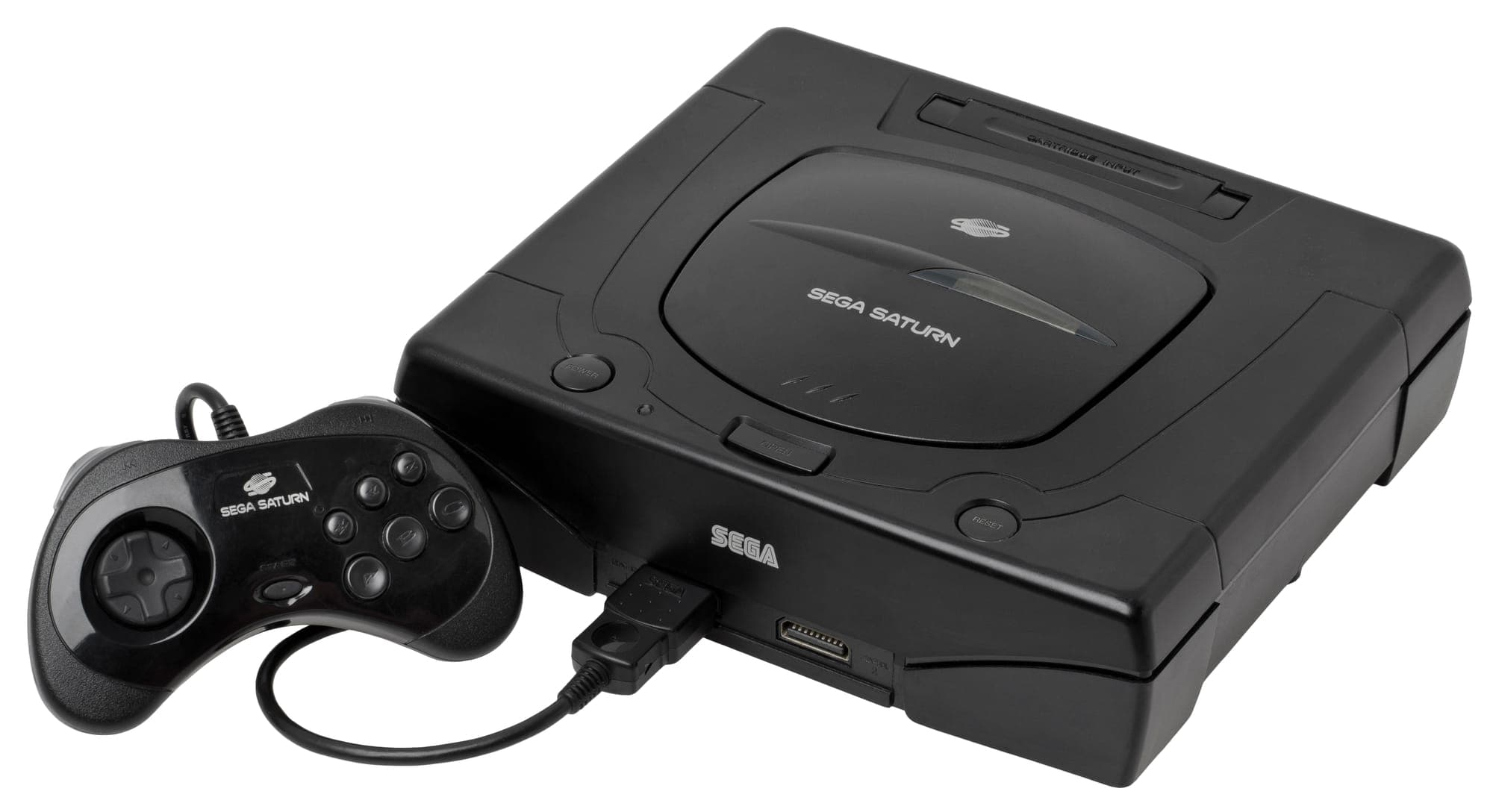
The Sega Saturn Rewards Knowledge, Not Deep Pockets
Pick up a Japanese Saturn game in a second-hand shop and watch what the collector next to you checks first. Not the disc. Not the manual. The spine card – the slim paper strip hugging the left edge of the jewel case. If it's gone, the price conversation changes on the spot.
No other console trains habits like that, because no other console's collecting culture runs so completely through Japan. The Saturn sold well at home and stumbled everywhere else, and three decades on, that split defines the entire hobby.
Why the Western shelves push you east
Sega's surprise North American launch – announced on stage at the first E3 in May 1995, months ahead of schedule – blindsided retailers and third-party studios alike, and the US library never recovered. The PAL situation was thinner still. What's left in the West is a catalogue that's small, patchy, and brutally expensive at the top: Panzer Dragoon Saga, Team Andromeda's four-disc RPG from 1998, is the textbook case of an English release costing several times its Japanese counterpart.
The Japanese catalogue runs several times deeper, and it's where the machine's real strengths live. The Saturn's twin Hitachi SH-2 processors and dedicated VDP2 background chip made it the best 2D console of its generation, and Japanese developers treated it accordingly:
- 2D fighters: Capcom's 4MB RAM-cartridge ports – X-Men vs. Street Fighter, Vampire Savior – were arcade-perfect and never left Japan.
- Shmups: Treasure's Radiant Silvergun (1998), Cave's DoDonPachi port, Raizing's Battle Garegga – Japan-only, every one.
- Home-grown hits: Sakura Wars sold enormously in Japan, and because of that huge print run it remains genuinely affordable today.
That last point is the pattern worth internalizing: plenty of the Saturn's best games are cheap precisely because Japan bought so many of them. The PAL library, meanwhile, leans hard on sports titles and arcade conversions – honest history you can grab for pocket change, like a boxed NBA Live 98, but not where the hunt is.
Obi strips and what “complete” actually means
Japanese Saturn games ship in standard CD jewel cases, which is quietly great news: a cracked case is a two-minute swap, not the small tragedy it is with the brittle tall cases North American releases came in. What you can't replace is the paper.
Complete for a Japanese release means disc, manual, rear inserts, any registration postcards – and the obi, that spine card. It was designed to be thrown away, so survival rates are poor and condition drives value hard. Two copies of the same fighter can sit at wildly different prices purely on whether a strip of paper survived thirty years of shelf life.
Region-locking sounds like a problem and isn't. An Action Replay 4M Plus cartridge boots imports on any Saturn and doubles as the RAM expansion those Capcom fighters demand – one cartridge, two problems solved. It's why almost nobody bothers hunting down region-modded consoles.
The hardware realities nobody warns you about
Every Saturn keeps its save data in battery-backed memory, fed by a CR2032 coin cell behind a door on the back of the console. When the cell dies – and it will – your saves and the system clock go with it. Veterans keep spares on hand and offload anything precious to a backup memory cartridge.
Controllers are their own subculture. The Japanese Model 2 pad has arguably the finest D-pad ever fitted to a controller, and it's the reason Saturn fighters feel right in a way they rarely do elsewhere – the kind of pad that makes a round of Ultimate Mortal Kombat 3 feel like the cabinet it came from. The chunkier North American launch pad is a different beast entirely, and the 3D Control Pad – introduced alongside NiGHTS into Dreams in 1996 – is essential if you want that game to make any sense.
The consoles themselves are forgiving. The white Japanese Model 2 unit is plentiful and usually the cheapest way into the hobby, while oddities like Victor's V-Saturn and Hitachi's Hi-Saturn exist mostly for people who've finished collecting everything else.
The silver-disc problem
Now the uncomfortable part. The Saturn's most desirable titles are also its most bootlegged, and because the console is easy to modify to boot copied discs, fakes of grails like Radiant Silvergun have circulated for years – some convincing enough to pass in a casual photo listing.
Your defences are unglamorous but effective:
- Ask for a photo of the inner hub ring – genuine Sega pressings carry manufacturing codes around the hub that bootlegs routinely get wrong or omit.
- Inspect print quality on the manual and obi; reproduction paper tends to look soft and slightly off-colour next to an original.
- Treat a bargain price on a grail title as a warning, not a win.
And that, really, is the Saturn's charm. On most platforms the collector with the deepest pockets wins; on Saturn, it's the one who can read an obi, a hub code, and a kanji title screen. No console rewards homework over cash quite like it. So here's the question that splits every Saturn shelf: do you pay the premium for the obi, or spend the difference on three more games? There's no wrong answer – but every collector has a firm one.


