 Back
Back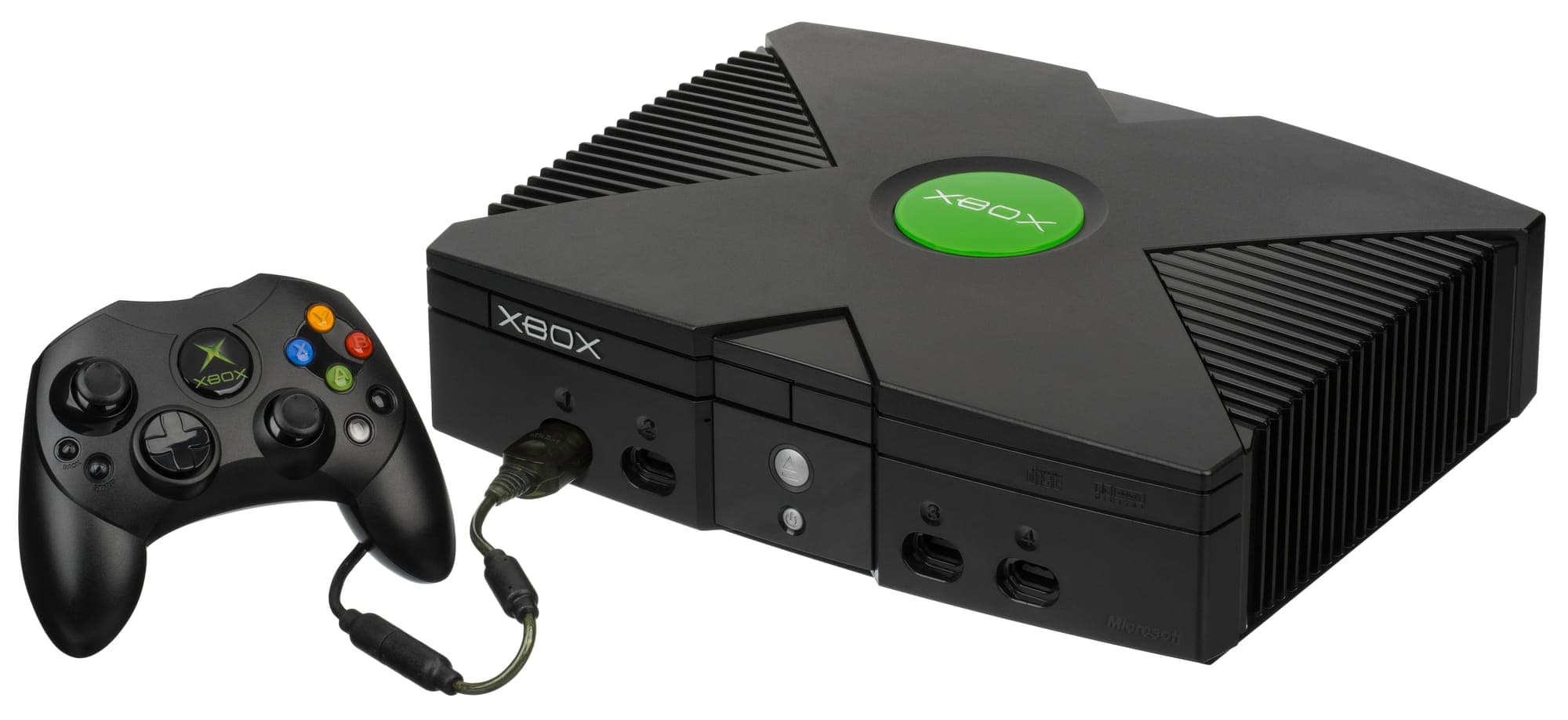
Why Every Original Xbox Needs Its Clock Capacitor Checked
Somewhere on a shelf right now, an original Xbox that hasn't been powered on since Halo 2 is quietly dissolving its own motherboard. That's not a metaphor. There's a real capacitor inside, leaking real electrolyte onto real copper traces, and whether the console survives depends on somebody opening it up in time. We'll get there – but first, the gamble that put the big black box on that shelf at all.
A 733 MHz gatecrash of the console war
When Microsoft launched the Xbox in North America on 15 November 2001 at $299, the industry consensus was that a Windows company had no business in the console business. Sony's PlayStation 2 had a year's head start, and Nintendo's GameCube arrived the very same week. Microsoft's answer was to stop pretending a console wasn't a PC: a 733 MHz Intel CPU, a custom Nvidia GPU, 64 MB of RAM, and – a first for a mainstream console – a built-in hard drive and an Ethernet port as standard equipment.
The hard drive meant saves without memory cards and custom soundtracks ripped straight to the machine. The Ethernet port made Xbox Live possible in 2002, which made Halo 2's online multiplayer possible in 2004, which is roughly where modern console gaming begins. And Bungie's Halo: Combat Evolved did the one thing every new platform prays for at launch: it made the hardware feel necessary.
The Duke, the controller Japan politely refused
The original pack-in controller – universally nicknamed the Duke – is genuinely enormous: a convex slab with widely spaced sticks and the odd Black and White buttons squeezed in above the face cluster. Western hands mostly adapted. Japanese hands did not, so Microsoft engineered the smaller Controller S for Japan's 2002 launch.
The rest of the world took one look at the S and sided with Japan. It became the standard pack-in everywhere, and the Duke was quietly demoted. Then something funny happened: the Duke became beloved. Hyperkin reissued it for Xbox One in 2018 with the blessing of Xbox co-creator Seamus Blackley, and today a clean boxed Duke is the controller collectors photograph – the S is merely the one they play with.
Crystal, Kasumi-chan Blue and the variants worth chasing
Standard black units are everywhere, which pushes the interesting money toward the special editions:
- Crystal Xbox – the translucent limited edition Europe got in 2004. The most recognisable variant, and the most attainable of the specials.
- Halo Special Edition – translucent green, released late in the console's life, and permanently in demand for obvious reasons.
- Kasumi-chan Blue – a Japan-only translucent blue tied to Dead or Alive Ultimate. The Xbox sold poorly in Japan, so anything Japanese-market carries a genuine scarcity premium.
- Mountain Dew Xbox – the orange promotional sweepstakes console. Properly rare; when one surfaces, it's an event.
And if you're hunting hardware to restore rather than display, job lots like this three-console Xbox bundle are often the smart play: one good board, one good drive, and a pile of spares.
The clock capacitor is eating boards right now
Here's the check that separates buyers from victims. Every board revision from 1.0 through 1.5 carries a clock capacitor – a small supercapacitor whose only job is keeping the date and time alive while the console is unplugged. Two decades on, these things leak, and the electrolyte corrodes the traces around them. Left alone long enough, it kills the board.
The fix is almost insultingly simple: open the console and remove the capacitor entirely. The Xbox runs perfectly without it – you'll just re-enter the clock after the machine loses mains power. Only the final 1.6 revision used a different part that isn't known for leaking, so unless the seller can prove a 1.6 board or a documented service, assume the cap is in there doing damage and price accordingly.
While you're inside, note the DVD drive brand. Thomson drives are the console's notorious weak point, with lasers that struggle as they age, while Samsung drives are the ones everyone hopes to find. A console that's slow to read discs today is telling you something.
So where does the big black box sit with collectors? Honestly: it's still the bargain of its generation. Loose consoles are plentiful and affordable, the softmod scene has made it the most tinker-friendly machine of its era, and the value has migrated into the library's cult corners – Panzer Dragoon Orta, FromSoftware's Otogi, Jet Set Radio Future, and CIB survivors like Call of Cthulhu: Dark Corners of the Earth. Even budget-line Xbox Classics reprints are worth grabbing while they're still overlooked.
The takeaway: buy the ugliest unserviced unit you can find, pull the clock cap the day it arrives, and you'll own the most repairable console Microsoft ever built. And be honest with yourself on the controller question – the Duke was right all along, and your hands know it.


