 Back
Back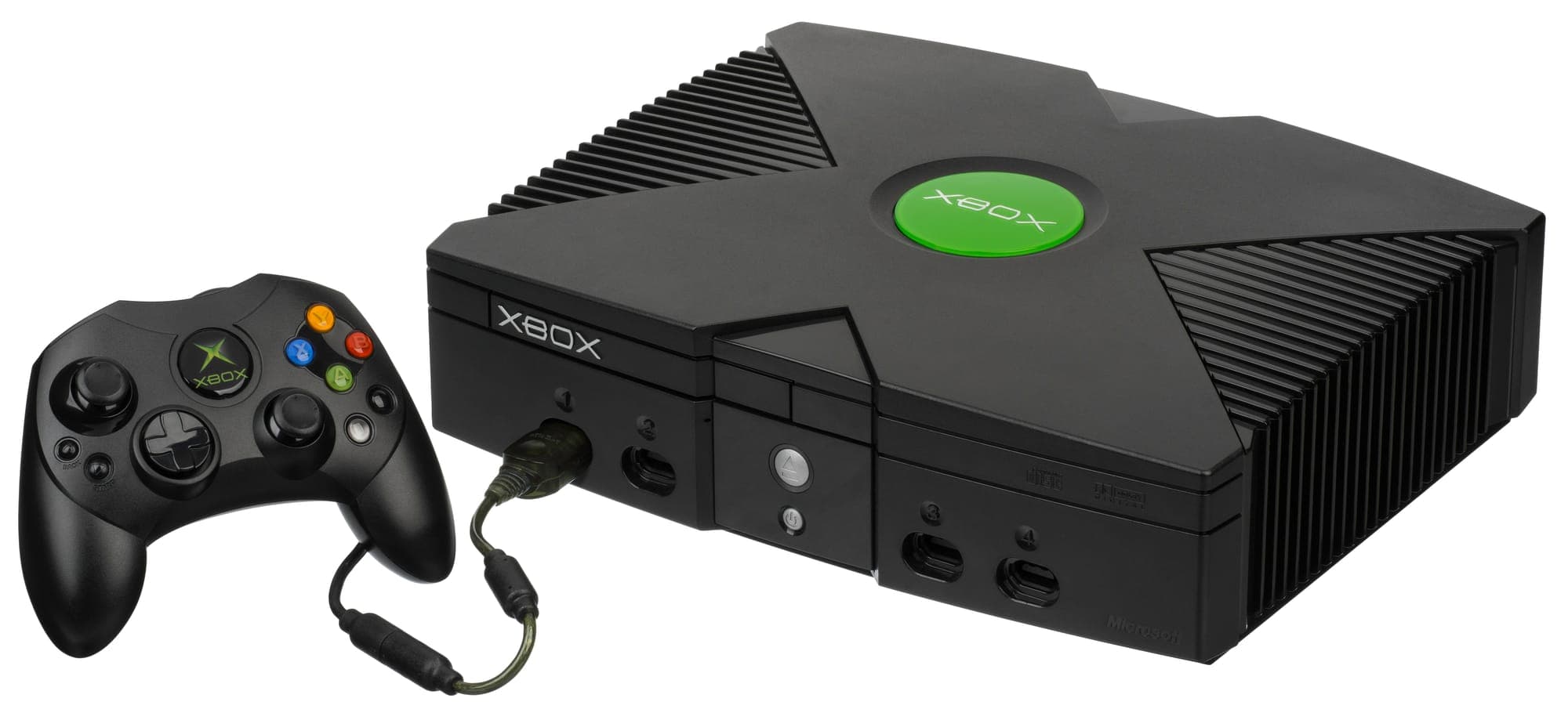
The Original Xbox Is Collecting's Biggest Blind Spot
Count the Xbox games on any sixth-generation grail list. You'll find a wall of GameCube, a shrine's worth of Dreamcast, a deep bench of PS2 survival horror – and somewhere near the bottom, Steel Battalion, mostly because of the controller. Microsoft's 2001 debut packed the strongest hardware of its generation – a 733 MHz Intel CPU and a built-in hard drive in an era of memory cards – and it has spent two decades being the platform collectors walk straight past.
That neglect is the opportunity. The library is deeper than its reputation, the weird corners are genuinely weird, and the interesting copies are still findable without a spreadsheet and a support group.
The exclusives everyone forgot Microsoft had
Halo: Combat Evolved launched the machine in November 2001 and Halo 2 carried it home in 2004. But the collecting story is everything Bungie's shadow hid. Sega, freshly out of the hardware business, treated the Xbox like a second Dreamcast: Smilebit's Jet Set Radio Future and Panzer Dragoon Orta both landed as platform exclusives, and in North America Shenmue II never got a Dreamcast release at all – it arrived on Xbox with Shenmue: The Movie bundled on DVD.
Then there's the strange stuff. Capcom's Steel Battalion shipped with a dedicated controller carrying roughly forty buttons and a set of foot pedals. FromSoftware put Otogi: Myth of Demons on the platform and kept Metal Wolf Chaos – a mech game starring the President of the United States – exclusive to Japan, where the console sold so poorly that nearly any Japanese Xbox release is a short-print curiosity. Add Tecmo's 2004 Ninja Gaiden reboot, Lionhead's original Fable, and cult sleepers like Phantom Dust and Call of Cthulhu: Dark Corners of the Earth, Headfirst Productions' Lovecraft sim whose console version never left the platform, and the weak-library reputation collapses.
Why collectors walked straight past it
Three forces kept Xbox prices sleepy while GameCube climbed the charts.
- Library overlap. The PS2 was the era's default console, so most third-party Xbox games exist elsewhere – usually on the platform with the bigger nostalgic fanbase.
- Backward compatibility. Microsoft has kept a healthy slice of the original library playable on its newer consoles, which removes the need-the-disc-and-the-hardware pressure that props up other retro markets.
- No cute factor. GameCube got miniature discs and a carry handle; Dreamcast got a tragic backstory. A two-hander of a console with a controller nicknamed the Duke got neither.
The result is a field where knowledge still beats money. Japanese releases, the Sega exclusives, and late-life titles from 2005 onward – when the Xbox 360 had already stolen the spotlight – are the corners worth learning first.
Green plastic doesn't lie: checking discs, cases and inserts
Original Xbox games came in that unmistakable translucent green DVD-style case, and the format has quirks worth knowing before you pay complete-in-box money.
- Black label versus budget reprint. North American hits were reissued as Platinum Hits and PAL titles as Xbox Classics, with the banner printed on the sleeve itself. Original printings are the ones collectors chase; a lot of Classics-branded copies is a player's bundle, not a shelf trophy.
- The sleeve, not just the case. The printed insert sits under a clear outer film that scuffs, peels and yellows. Cases are replaceable; a faded or water-rippled sleeve isn't.
- Manual and inserts. Retail Xbox games shipped with manuals, and early copies often carried Xbox Live promo flyers. Complete should mean all of it, so ask for photos of the open case.
- Region coding. Most Xbox games are region-locked, so check that a PAL copy actually matches your console before you commit – the ratings logos on the sleeve give it away at a glance.
- The disc itself. An Xbox disc won't reveal its game data in a PC drive, so you can't easily verify one at home. Study the photos for resurfacing swirls and deep radial scratches, and ask the seller whether it has been tested on real hardware.
Buying a console too? Every board revision except the final 1.6 carries a clock capacitor that leaks and eats nearby traces, and the launch-era Thomson disc drives were the flakiest of the lot. Ask whether that capacitor has been removed – snipping it out costs nothing and saves the motherboard.
Every collecting field has a window where knowledge is worth more than cash, and the big black box is still inside it. The Dreamcast faithful haven't quite noticed where Smilebit's best work actually ended up. So – black-label Panzer Dragoon Orta or a boxed Steel Battalion controller: which one are you hunting first?


