 Back
Back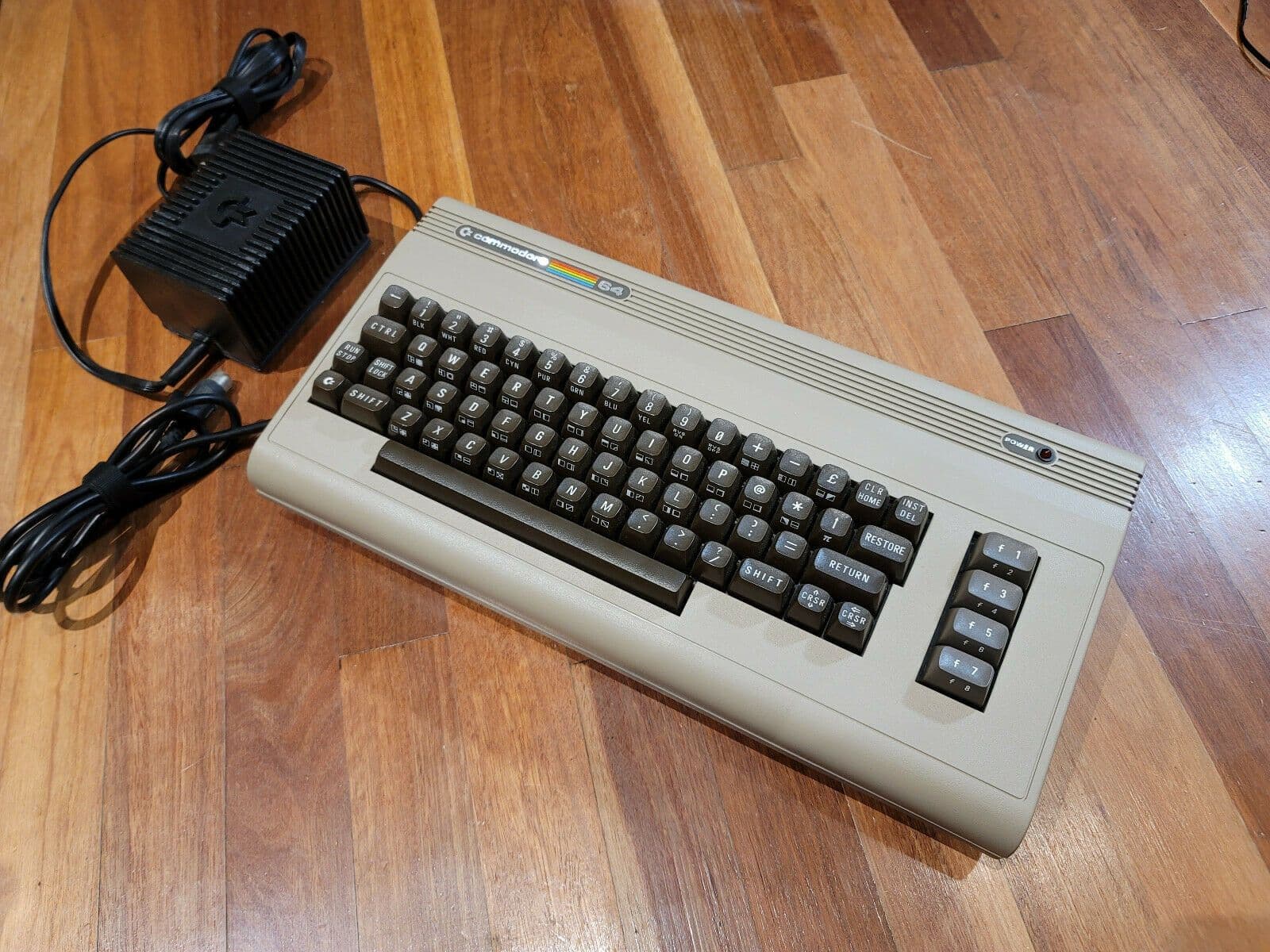
Why Collectors Are Coming Home to the Commodore 64 and Amiga
Ask a German, British, or Danish collector what their first gaming machine was, and the answer usually isn't a console at all. It's a beige breadbin with a tape deck, plugged into the family TV. Across most of Europe, the Commodore 64 and the Amiga were the gaming platforms of the 80s and early 90s – the NES never ruled here the way it did in the US and Japan – and that history is quietly redrawing the map of what serious collectors chase.
In Europe, the console war was fought with tape decks
The Commodore 64 launched in 1982, and its MOS 6581 SID chip – a genuine three-voice synthesizer living inside a home computer – turned composers like Rob Hubbard and Martin Galway into names kids traded like footballers. Games came on cassette at pocket-money prices, Mastertronic built an empire on £1.99 budget tapes, and magazines like Zzap!64 covered the whole circus with more attitude than any console mag ever managed.
Then the Amiga 500 arrived in 1987. Paula pushed four channels of sampled sound, the blitter threw graphics around, and for years nothing else in a European bedroom came close. Turrican II, Sensible Soccer, Speedball 2, Psygnosis' Shadow of the Beast with its Roger Dean box art – this is the continent's equivalent of the SNES canon. The collectors who grew up on it are now buying it back, and they're pulling console-first collectors along with them.
The scene never died – it just got sharper
Here's what separates retro computing from most retro collecting: the machines are still alive. The demoscene keeps wringing impossible effects out of 1982 silicon – Revision in Saarbrücken every Easter, and the X party in the Netherlands dedicated purely to new C64 productions. These aren't museum pieces being dusted off once a year; they're platforms people still compete on.
The homebrew side is just as busy. Sam's Journey from Knights of Bytes is a full boxed cartridge platformer for the C64 that plays like it fell through a wormhole from 1991, and publishers like Protovision keep pressing new physical releases. Meanwhile, the hardware ecosystem has quietly solved the "will it still run in ten years?" problem:
- Ultimate 64 – a full FPGA reimplementation of the C64 mainboard, for when forty-year-old chips finally give up
- 1541 Ultimate-II+ and SD2IEC – load the entire C64 library from an SD card without touching fragile floppies
- Gotek floppy emulators and PiStorm accelerators – the Amiga equivalents, keeping A500s bootable and surprisingly quick
- THEC64 and The A500 Mini – gateway machines that keep converting curious console collectors into full-fat hardware owners
Why "does it boot?" beats "is it boxed?"
Console collecting trained everyone to fetishise the box. Home-computer collecting flips the weighting. These were working machines – typed on, programmed on, thrashed daily for a decade – so working condition and a complete setup carry the weight that mint packaging carries on the console side. A C64 that boots to that famous blue READY screen, with a solid keyboard, a disk drive or Datasette, and the right cables, matters more to this community than a prettier one that doesn't power on.
There's real technical diligence involved, and buyers ask hard questions. Has the Amiga been recapped? Was the battery in the A501 memory expansion removed before it corroded the board? Is the C64 on a modern power supply – the original brick is notorious in the community for failing high and taking the precious SID chip with it? And is it a PAL machine? Most European software and nearly all demos assume PAL timing, so a cheap NTSC import isn't the bargain it appears to be. A genuinely complete C64 setup – machine, PSU, leads, manuals – is the thing collectors actually fight over.
Boxed original software is its own discipline
Then there's the software, which is a different hobby wearing the same trench coat. C64 games shipped on cassettes with inlays that crease if you look at them wrong; Amiga games came in big cardboard boxes stuffed with manuals, code wheels, and floppies that degrade whether you play them or not. "Complete" means something stricter here than console CIB – collectors count the disks, check the write-protect tabs, and grade the inlay separately from the tape itself.
And because these machines were so fiercely regional, the software landscape is full of local oddities: budget-label tapes, magazine cover disks, and promotional one-offs like Guldkorn Expressen, a Danish cereal tie-in game most collectors outside Scandinavia have never seen in the wild. That's the charm – the C64 and Amiga libraries are so deep and so scattered across Europe that no two collections ever converge.
Here's the hot take: a working, complete Amiga 500 is a better long-term collectible than most graded console games, because its value rests on a living community rather than a sealed slab of plastic. Disagree? Tell us what's on your bench – and whether it still boots.


