 Back
Back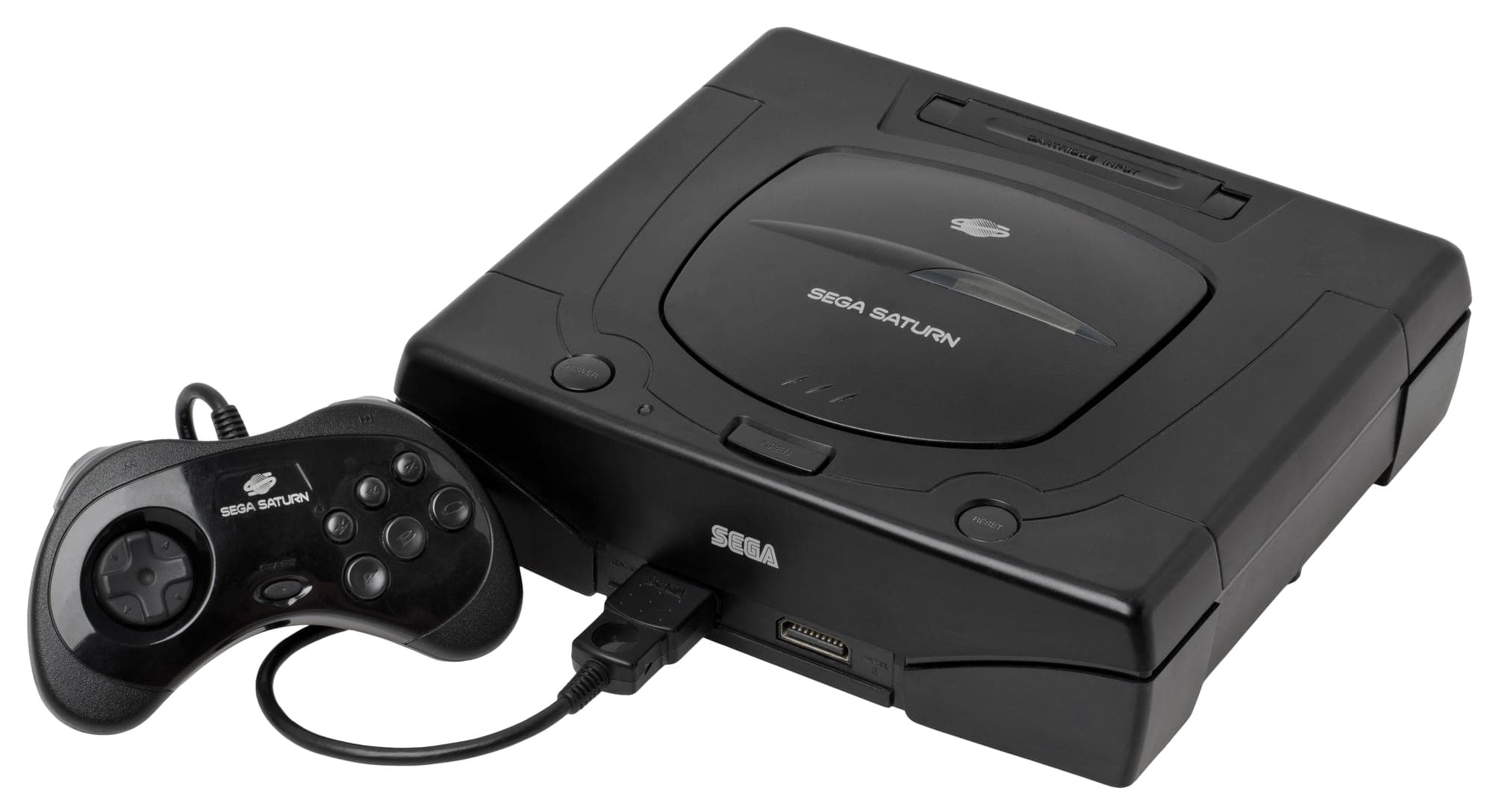
Why the Sega Saturn Collector Market Runs on Imports
Ask a Saturn collector to show you their shelf and count how many spines read top-to-bottom in kanji. On most serious collections it's the majority – and that's not an affectation. The Saturn is the rare console where the imports aren't a side quest for completionists; they're the main event, and the Western releases are the supporting cast.
A console that died in the West and thrived at home
The Saturn launched in Japan in November 1994 and got its infamous surprise US launch at E3 in May 1995, months ahead of schedule and with barely any games on shelves. By 1998 Sega had effectively wound the machine down in North America and Europe to clear the runway for the Dreamcast. Japan, meanwhile, kept the Saturn alive with new releases well after the West had moved on.
That asymmetry is the whole story. Hundreds of games – including many of the system's genuine masterpieces – simply never left Japan. The hardware made it worse, in the best way: those dual Hitachi SH-2 processors and the VDP2 background chip made the Saturn the finest 2D machine of its generation, exactly when Western publishers wanted polygons. Japan's arcade developers noticed. The West's marketing departments didn't.
The import canon: shooters, fighters, RPGs
Three genres dominate the Saturn import conversation, and every one of them is Japan-heavy at the top end:
- Shooters: Treasure's Radiant Silvergun (1998) never left Japan on Saturn and became the poster child for import collecting. Behind it sits a deep bench – Battle Garegga, DoDonPachi, the Cotton games – arcade ports that Europe and America never saw.
- Fighters: Capcom's best Saturn work – X-Men vs. Street Fighter, Vampire Savior – required the Japan-only 4MB RAM cartridge for arcade-accurate animation, so the ports themselves stayed Japanese. The West got fighters, sure – Ultimate Mortal Kombat 3 made the trip – but the RAM-cart tier didn't.
- RPGs: Shining Force III shipped as three scenarios in Japan; only the first was localized. Sakura Wars, Princess Crown, and the Saturn version of Dracula X (yes, a Symphony of the Night port) all stayed home too.
So when collectors talk about "the Saturn library," they're increasingly talking about the NTSC-J shelf. The Western catalogue has its crown jewels – Panzer Dragoon Saga's tiny print run is legendary – but the depth lives in Japan.
Region-free play changed who's buying
The Saturn is region-locked, and for years that kept import collecting a niche for people willing to solder or perform disc-swap tricks. Not anymore. An Action Replay cartridge handles region bypass and the RAM expansion in one slot, Pseudo Saturn Kai can be flashed onto cheap carts, and optical drive emulators like the Satiator, MODE and Fenrir have made playing (and backing up) any region trivial.
That accessibility rewired demand. The buyer for a Japanese copy of Vampire Savior used to be a hardcore enthusiast with a modded console; now it's anyone with a stock PAL Saturn and a forty-quid cartridge. When the friction disappears, the import market stops being a specialist corner and starts setting the tone for the whole system – which is precisely what happened. Japanese jewel cases with intact spine cards became the default collecting target, helped by the fact that they're compact, cheap to ship, and were produced in numbers that keep common titles affordable.
So: start with PAL, or go straight to Japan?
Honest answer – it depends on what you want the shelf to do.
The PAL catalogue is smaller and carries the era's usual baggage (plenty of 50Hz conversions with borders), but it's where you'll find affordable copies of the games Sega actually pushed in Europe: Sega Rally Championship, the Panzer Dragoon games, NiGHTS into Dreams. It also has quirks worth knowing – Deep Fear, Sega's survival horror, came out in Europe and Japan but never in North America, making PAL the accessible Western way to own it. And PAL sports titles like NBA Live 98 on Saturn are exactly the kind of low-cost shelf filler that lets you build momentum without remortgaging anything.
But if what drew you to the Saturn is what the Saturn is actually best at – 2D arcade perfection – skip the detour. Buy an Action Replay with your console, learn to read a spine card, and start with the common-tier Japanese releases before working up to the expensive stuff. Text-heavy RPGs are the one real caveat: Shining Force III's untranslated scenarios are a commitment, whereas a shmup needs no localization at all.
My take: the PAL-first route builds a nice collection; the import-first route builds a Saturn collection. The machine's identity was always Japanese – collecting it any other way means spending years buying around the hole in the middle of the shelf. Which side of that line are you on?


