 Back
Back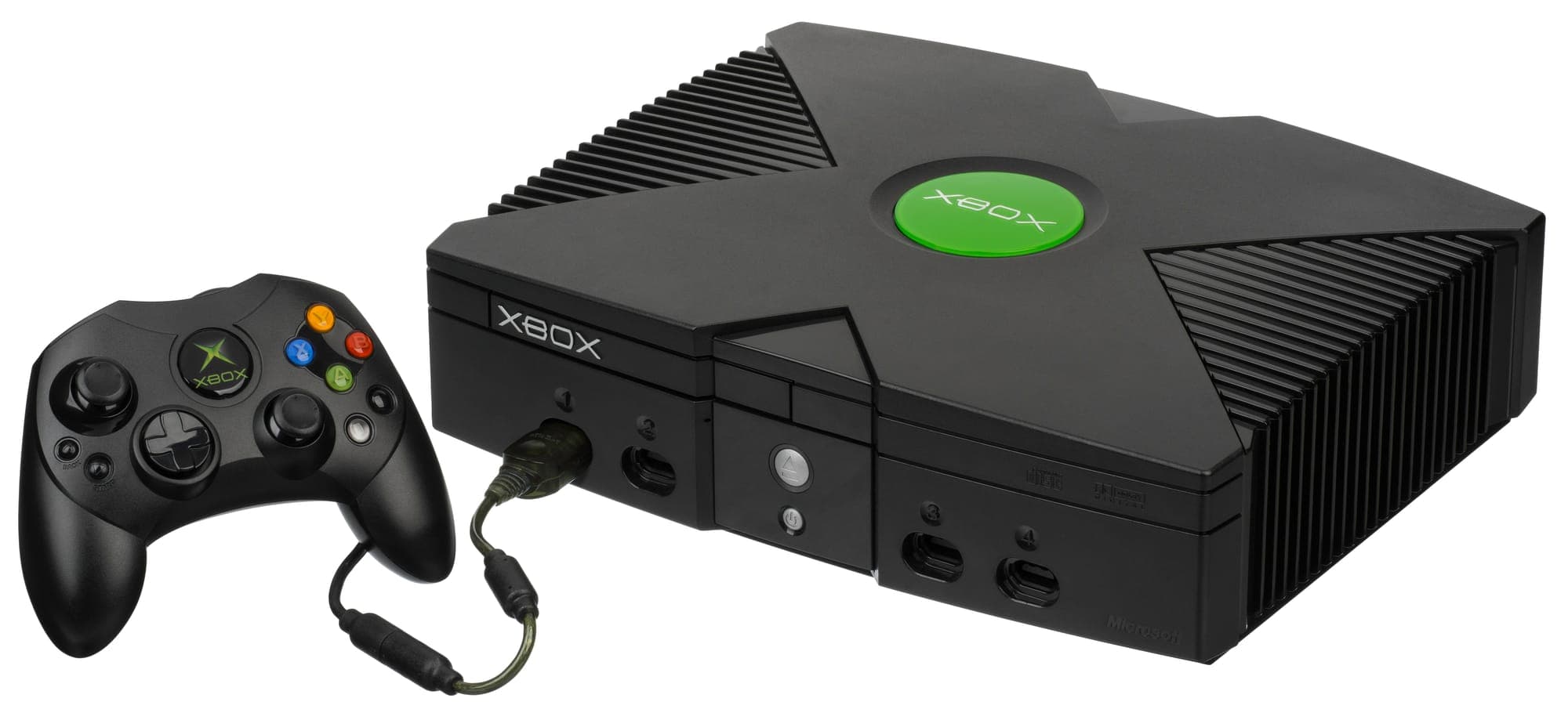
The Original Xbox Is Finally Having Its Collector Moment
Every original Xbox built before the 1.6 board revision is quietly eating itself. There's a barrel-shaped clock capacitor on the motherboard whose only job is to remember the time while the console is unplugged, and after two decades most of them have leaked – or will – spilling electrolyte onto the traces around them. That one component now shapes what a “working” Xbox is actually worth more than anything on the spec sheet.
Why it took the Xbox twenty years to get interesting
Microsoft's 2001 debut spent most of its afterlife as the cheapest retro console going. It sold in the tens of millions, shared much of its library with the PlayStation 2, and had one game everybody remembered. Thrift shops were full of them, and nobody romanticised a machine that was essentially a PC in a black case: a 733 MHz Intel CPU, an Nvidia GPU, a hard drive, and an Ethernet port in 2001.
That's exactly what flipped. The kids who ran Halo 2 LAN parties in 2004 now have disposable income, the PC-like guts made the Xbox a darling of the softmodding scene, and the era's sheer disposability means clean, complete examples are far scarcer than the sales figures imply. The Xbox skipped the hype cycle the SNES and N64 rode a decade ago – so the interesting stuff is climbing from a low base while the sports shovelware still costs less than the postage.
The games doing the heavy lifting
Value doesn't live with the big sellers – a loose Halo: Combat Evolved is one of the most common discs on the planet. It hides in four pockets:
- Steel Battalion. Capcom's 2002 mech sim shipped with a three-panel controller and pedal set carrying roughly forty inputs. A complete, working rig is the platform's undisputed grail, and the box alone disqualifies most casual sellers from shipping it properly.
- Sega's exclusives. Jet Set Radio Future (2002), Panzer Dragoon Orta (2003) and the Xbox conversion of OutRun 2 (2004) are the platform's artistic high-water mark; Orta in particular has become shorthand for “serious Xbox shelf”.
- FromSoftware's oddities. Otogi: Myth of Demons and Metal Wolf Chaos (2004) – a mech game starring the President of the United States, fully voiced in English yet sold only in Japan – are exactly the kind of story collectors pay a premium for.
- The late-life cult run. Anything released in 2004–2005, when the world was already staring at the Xbox 360, got small print runs. Call of Cthulhu: Dark Corners of the Earth (2005), Stubbs the Zombie and Phantom Dust all sit here, and CIB copies are the ones that vanish first.
Two structural notes. Most of the library is region-locked, so PAL, NTSC-U and NTSC-J copies are genuinely separate markets – a PAL copy of Leisure Suit Larry: Magna Cum Laude is a different object from its American twin. And first prints beat reissues: original cases carry the premium over the PAL-territory “Classics” budget line (Platinum Hits in North America), though Classics-label bundles remain the cheap, correct way to build a library you actually play.
Dukes, S-pads and translucent shells
The controller story flipped completely. The original pack-in – the enormous pad everyone calls the Duke – was so unpopular that Microsoft replaced it with the smaller Controller S, originally designed for the Japanese market. Twenty years on, the Duke is the sentimental favourite and even earned an officially licensed Hyperkin re-release; clean originals, especially the translucent colour variants, now outshine the S-pads that actually won the argument.
On consoles, the translucent runs are where the action is: the green Halo Special Edition, the European Crystal, and Japan-only variants like the Skeleton and the Dead or Alive-themed Kasumi-chan Blue, produced in genuinely small numbers for a market where the Xbox barely sold at all. Japanese special editions are the deep end of this pool, and the paperwork matters as much as the plastic.
What “working” should mean before you pay for it
Back to that capacitor. On board revisions 1.0 through 1.5, assume the clock cap has leaked or is about to. The repair is famously easy – snip it out, since the console runs fine without it – but electrolyte that has sat on the board for years corrodes traces past the point of a casual fix. “Tested, works” tells you nothing about what's happening under the shell. Ask whether the cap has been removed and the board inspected; that answer is worth more than mint plastic.
The DVD drive is the other lottery. Microsoft sourced drives from several suppliers – Thomson units have the worst reputation among collectors, Samsung the best – and a tired laser fails on burned and CD-based media long before it rejects pressed DVDs. “It played the disc in the photo” can be perfectly honest and still describe a drive in its final year.
So here's the honest framing: buy this market like it's vintage PC hardware wearing a console shell. The games and special editions are the collectibles; the console itself is a maintenance item, and provenance plus board work should command your money before the word “working” does. And if there's a lonely 1.6 in your closet – the revision hardware modders always grumbled about – congratulations: you own the one Xbox that was never going to leak. Turns out the market has a sense of humour after all.


