 Back
Back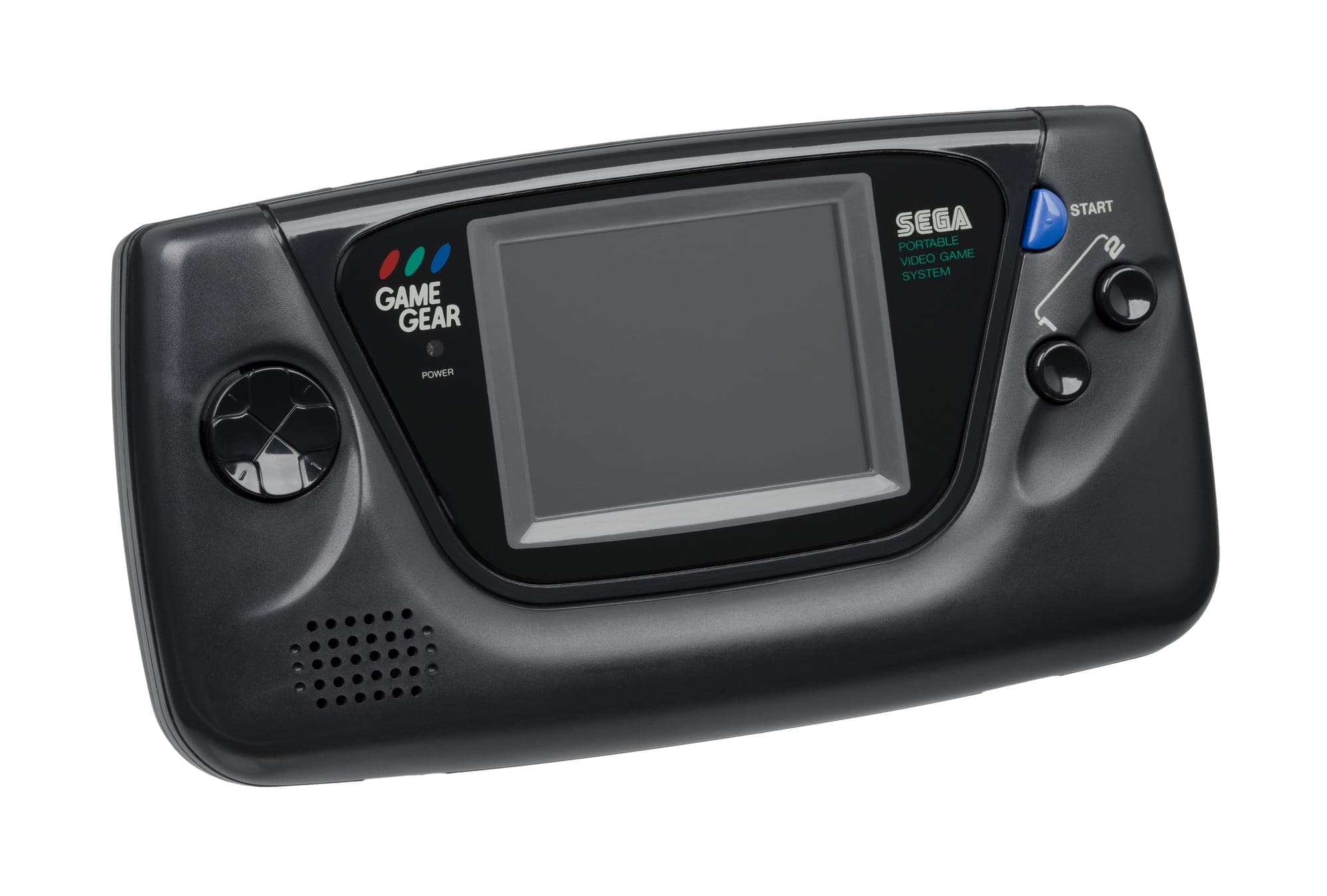
Why Every Unserviced Game Gear Is on Borrowed Time
The listing says "tested – powers on." The photo shows Sonic frozen on the title screen, and the description never once mentions sound. Experienced Game Gear collectors read that silence the same way: the capacitors are going, and the seller either doesn't know or doesn't want to say.
Sega's 1990 handheld is a strange collectable. It's essentially a Master System you can hold – a Z80 heart pushing a 4,096-colour palette onto a backlit 3.2-inch screen while the Game Boy made do with four shades of green. But that screen and its fluorescent backlight drank six AA batteries in an afternoon, and the surface-mount electrolytic capacitors inside are now failing in essentially every unserviced unit. Hardware survival isn't a footnote here. It's the whole hobby.
How to read a Game Gear listing like a technician
Capacitor failure follows a predictable script. First the audio gets faint, then it dies – the small sound board's caps usually go first. Then the screen dims, washes out, or throws garbled lines. Eventually the unit won't power on at all. Every phrase in a listing maps to a point on that timeline.
- "Tested, works" – the seller got a game to boot. Ask directly: is there sound from the speaker and the headphone jack? Is the picture stable at full brightness? No clear answer means you price it as untested.
- "No sound" – the classic first symptom of leaking caps. Not a dealbreaker if the price reflects a mandatory recap, and don't wait once you own it: electrolyte eats traces the longer it sits.
- "Recapped" – the magic word, but interrogate it. A proper job replaces the electrolytics on the mainboard, the sound board and the power board. Ask which boards were done, and when.
- "For parts" – often the most honest listing on the page, and frequently the smarter buy. A cheap dead unit destined for a recap beats paying working-unit money for an untested gamble that arrives silent.
One wrinkle: later motherboard revisions consolidated chips and used fewer capacitors, and the Majesco-era reissued units are simply younger. Neither is immune. Every stock Game Gear is on the clock.
Screens, shells, and the battery bay of horrors
Even a healthy original screen ghosts. The passive-matrix LCD smears fast motion so aggressively that some action games are genuinely harder to play on real hardware – that's not damage, that's 1990. Learn the difference between inherent blur and cap-related dimness before you accuse a seller of anything.
Modern drop-in LCD replacement kits change the machine completely: sharp, bright, no ghosting, and far kinder to batteries. Purists debate whether a modded unit still counts as original; anyone who's played Sonic Triple Trouble on both tends to stop debating. For shells, pop both battery covers – the single most commonly lost part of the whole system – and check the terminals for the crusty residue of leaked AAs, which can creep from the battery bay toward the power board. Scratched screen lenses are plastic and polishable; a genuinely cracked lens is a bargaining chip.
The accessory ecosystem nobody kept
- TV Tuner – a cartridge that turned the Game Gear into a tiny portable television. Analogue broadcasts are long gone, so it's a display piece now, and a boxed one is the crown jewel of the ecosystem.
- Rechargeable battery packs – Sega's answer to the six-AA appetite. The period NiCd cells inside are almost always dead; treat them as shelf items, not daily drivers.
- Master Gear Converter – plays Master System cartridges on the handheld and quietly doubles your library. Underrated.
- Car adapter and AC adapter – the AC adapter was near-mandatory in period. Verify polarity before trusting any third-party replacement.
- Clip-on magnifier lenses and the Gear-to-Gear link cable – flimsy plastic that survived poorly, so complete boxed examples are scarcer than you'd expect.
The library beyond Sonic, and why the boxes vanished
The Sonic ports get the attention, but the deep cuts justify the hardware. Sonic Triple Trouble and Tails Adventure are proper Game Gear exclusives, not downports. The GG Shinobi is one of the best action games on any handheld of its era. RPG hunters chase Defenders of Oasis and Shining Force: The Sword of Hajya, while the Japan-only shelf holds Sylvan Tale, Compile's GG Aleste shooters, and a Gunstar Heroes port that was developer M2's first-ever project. Mega Man's US-only Game Gear outing, meanwhile, is a legitimately scarce cartridge.
Finding any of it boxed is the hard part. These games shipped in throwaway cardboard, and the Game Gear was a machine that lived in backpacks and back seats – carts travelled loose in coat pockets while the boxes went in the bin within a week. Complete-in-box Game Gear games are disproportionately rare compared to console games of the same era for exactly that reason: nobody archived a commuter toy.
Here's the honest takeaway: with this platform you're not really buying hardware, you're buying a maintenance history. A recapped unit with details is worth a premium; a cheap, frankly described for-parts unit is a project; the confident-sounding "tested" listing in the middle is where the money goes to die. Which word makes you close the tab fastest?


