 Back
Back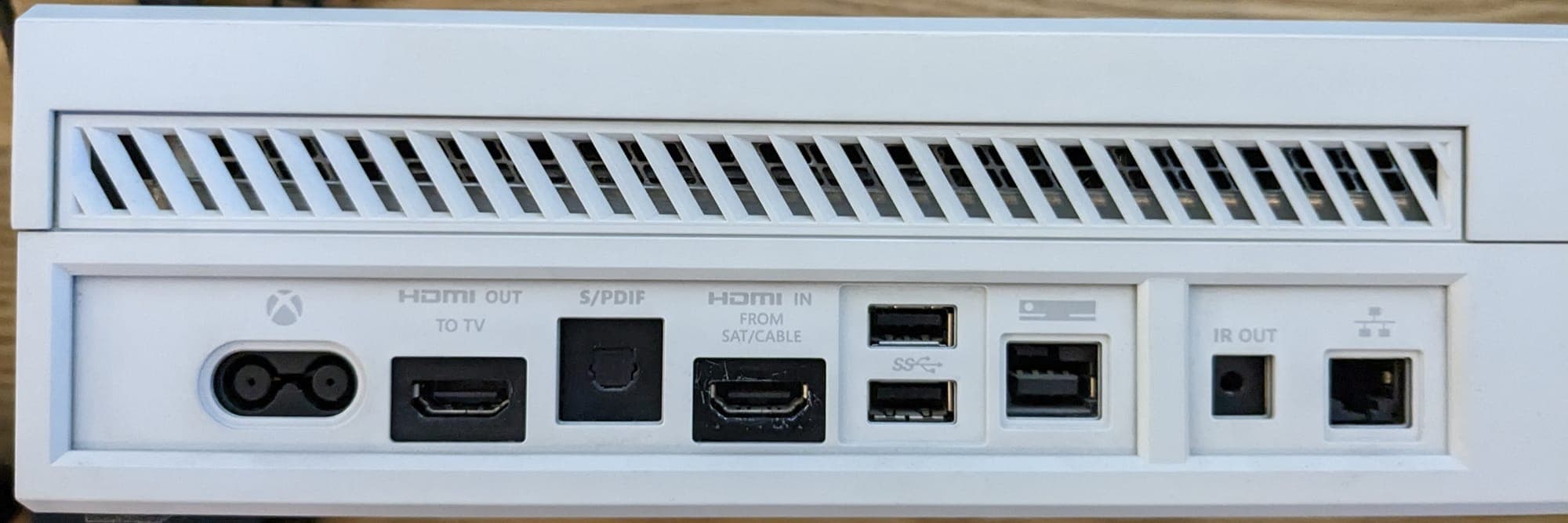
What the Xbox One Actually Leaves Behind for Collectors
Pick up a Day One 2013 controller and you're holding the receipt for one of the strangest console launches ever attempted. Chrome D-pad, DAY ONE 2013 stamped across the face, and in the box it shipped in, a one-time code for a commemorative achievement. Microsoft built a collector's item out of a console it would spend the next several years walking back – and that, oddly, is exactly what makes the Xbox One interesting to collect.
A launch edition built around a vision Microsoft abandoned
The Xbox One arrived in November 2013 as a Kinect machine first and a games console second. Every launch unit had the Kinect 2.0 sensor bundled in, non-negotiable, at a hundred dollars more than the PS4 – and that was after Microsoft had already reversed its always-online, disc-restriction DRM plans following the E3 2013 backlash, before a single unit shipped.
Within a year the Kinect was out of the box. The Xbox One S and Xbox One X then dropped the dedicated Kinect port entirely, leaving owners dependent on a USB adapter that Microsoft itself later discontinued. The sensor that defined the launch became an orphan on the platform's own later hardware.
That's why a complete Day One Edition – console, sensor, Day One controller, inserts, the lot – is more than launch merch. It's a sealed record of the console Microsoft wanted to sell, as opposed to the one it ended up selling.
The custom hardware worth hunting
Early Xbox One "limited editions" were mostly bundles: the Titanfall package was a standard black console with a game riding along. The genuinely custom shells came later, and they're the ones collectors will actually chase:
- The Call of Duty: Advanced Warfare 1TB console (2014) – the first properly custom Xbox One design
- The Halo 5: Guardians Limited Edition (2015)
- The deep crimson Gears of War 4 Xbox One S (2016)
- The Minecraft Xbox One S, styled as a grass block with a creeper-skinned controller (2017)
- The Project Scorpio Edition Xbox One X (2017), with the pre-release codename printed on console and pad
- The glow-in-the-dark Cyberpunk 2077 Xbox One X (2020), billed by Microsoft as the final custom One X
Here's the pattern that matters: Xbox One hardware is plentiful, but complete boxed examples of these editions are not. Consoles got used, stands got lost, boxes went to the recycling bin. Condition and completeness will separate the shelf pieces from the spares-and-repairs pile, same as it did for every generation before it.
When "complete in box" includes a dead code
Every Xbox One disc game installs in full to internal storage. The disc isn't the game so much as a licence check with a head start on the download. That quietly breaks the oldest assumption in game collecting: that the thing in the case is the thing you play.
It gets messier. The version pressed to disc is often not the game anyone remembers playing – Halo: The Master Chief Collection shipped in 2014 with a day-one download so large that the disc alone was barely half the story. And the DLC vouchers and season-pass codes tucked into launch-era cases are now, in many instances, just dead paper.
Compare that with the generation before. A steelbook like the Gears of War 2 Limited Edition on Xbox 360 still does everything it did at release: disc in, game on, artbook in hand. For the Xbox One, "complete in box" certifies the artefact, not the experience – and future collectors will have to make peace with that distinction.
Genuinely scarce, or just old?
Most Xbox One games will never be hard to find. Annual Call of Duty entries, FIFA, the big launch-window shooters – these sold in the millions and will sit in bargain bins for decades. Old is not the same as rare.
The genuinely thin categories look different. Kinect-required titles like Kinect Sports Rivals and Harmonix's Fantasia: Music Evolved depend on a discontinued sensor and, on later consoles, a discontinued adapter – playable copies of playable setups get rarer every year. Japanese retail releases are another quiet one: the Xbox One sold famously poorly in Japan, so its domestic physical library was printed accordingly, and the console being region-free means those copies actually work on any unit.
Then there's the small-publisher tier. The Xbox One never grew the boutique physical scene the PS4 enjoyed, so niche boxed releases like Soedesco's Aerea Collector's Edition exist in far smaller numbers than their profile suggests. Even mid-tier Japanese ports – a Dragon Ball Xenoverse disc, say – turn up on Xbox far less often than the PS4 printing you see everywhere. And some of the platform's most distinctive exclusives, like Swery's D4: Dark Dreams Don't Die, were digital-only and left nothing physical behind at all.
The final irony is the 2019 Xbox One S All-Digital Edition: a console with no disc drive, from the generation that taught discs to need the internet. My bet is that the machine designed to leave nothing behind becomes the curiosity people display. So – sealed Day One Edition or glow-in-the-dark Cyberpunk X: which one earns your shelf?


